Every year, the global oil and gas industry quietly loses more than 500 million liters of hydraulic fluid — not to catastrophic blowouts, but to slow, overlooked leaks. One liter of spilled hydraulic oil can contaminate up to one million liters of groundwater. A single unplanned shutdown can cost upwards of $100,000 per hour. And starting July 2026, new emission standards will make the industry’s long-standing tolerance for “acceptable” leak rates a direct compliance liability. For equipment managers and sustainability leads navigating tighter regulations, rising operating costs, and mounting ESG pressure, the question is no longer whether to upgrade hydraulic systems — it’s how fast.
- Introduction
- 1. Sustainability Trends and Challenges in the Oil Industry
- 2. Low-Leakage Hydraulic Technology
- 3. Long-Life Hydraulic Technology
- 4. 2026 Environmental Regulations and Industry Standards
- 5. Core Green Hydraulic Technology Solutions
- 6. Industry Case Studies
- 7. Return on Investment (ROI) Analysis
- 8. Frequently Asked Questions (FAQ)
- 9. Conclusions and Recommended Actions
- Appendix: Glossary of Green Hydraulic Technology Terms
Introduction
Three Major Pressures Facing the Oil Industry in 2026
| Pressure Type | Manifestations | Impact Level |
|---|---|---|
| Environmental Compliance | Stricter carbon emission caps, tighter leak standards, heavier penalties | 🔴 High |
| Operational Cost | Rising energy prices, unplanned downtime losses, increasing maintenance costs | 🔴 High |
| Social Responsibility | ESG ratings, investor expectations, growing public environmental awareness | 🟠 Medium-High |
Hydraulic System Leaks: An Overlooked Environmental and Cost Black Hole
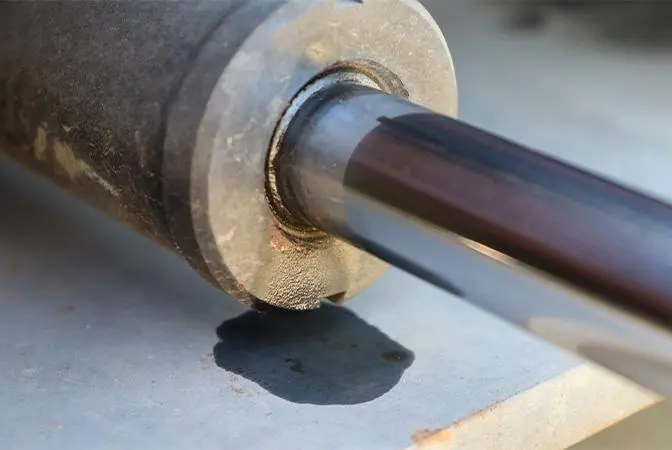
Industry Data:
- Global oil industry loses over 500 million liters of hydraulic oil to leaks annually
- Average environmental fine per major leak incident: RMB 500,000 – 5,000,000
- Unplanned downtime losses: RMB 100,000 – 1,000,000 per hour
- Carbon footprint of hydraulic oil production: approximately 3 kg CO₂/liter
- Average annual leakage per unit (traditional system): 50–200 liters
↓
Environmental pollution + Resource waste + Downtime losses + Compliance risk
↓
Annual total cost loss: RMB 100,000 – 500,000 per unit
Core Value of Green Hydraulic Technology
Green hydraulic technology framework:
┌─────────────────────────────────────────────────────┐
│             Green Hydraulic Technology System        │
├─────────────────────────────────────────────────────┤
│  🎯 Low Leakage  → Seal upgrades + Smart monitoring + Rapid response   │
│  ♻  Long Life    → Material optimization + Preventive maintenance + Condition management │
│  📊 Traceability → Data logging + Lifespan prediction + Decision support │
│  🌱 Recyclability → Material selection + Disassembly design + Circular reuse │
└─────────────────────────────────────────────────────┘
1. Sustainability Trends and Challenges in the Oil Industry
1.1 Oil Industry Transformation Under Global Carbon Neutrality Goals
| Milestone | Policy / Target | Impact on Hydraulic Technology |
|---|---|---|
| 2025 | CNPC Carbon Peak Action Plan | Equipment energy efficiency +15%, leak rate reduced by 50% |
| 2026 | MEE Revised Petrochemical Pollutant Emission Standard | VOC emission caps tightened by 30% |
| 2027 | Full ESG rating coverage for state-owned enterprises | Environmental metric weighting raised to 40% |
| 2030 | CNPC Carbon Peak | Carbon emissions per unit output reduced by 25% |
| 2060 | National Carbon Neutrality | Near-zero emissions across the entire value chain |
1.2 Five Major Challenges for Hydraulic System Sustainability
| Challenge | Current Status | Target | Gap |
|---|---|---|---|
| Leak Control | Average leak rate 3–5% | <0.5% | 6–10x |
| Equipment Lifespan | Average 5–8 years | 15–20 years | 2–3x |
| Energy Efficiency | System efficiency 60–70% | >85% | 15–25% |
| Oil Change Interval | Every 1–2 years | Every 3–5 years | 2–3x |
| Recyclability | Recovery rate <50% | >90% | 40%+ |
1.3 Environmental and Economic Impact of Leaks
Environmental Impact:
- 1 liter of hydraulic oil can contaminate 1 million liters of groundwater
- Natural degradation cycle of hydraulic oil: 5–10 years
- Carbon emissions from incineration: approximately 3 kg CO₂/liter
Economic Impact (mid-sized pump station example):
| Cost Item | Traditional Solution | Green Solution | Annual Savings |
|---|---|---|---|
| Hydraulic oil replenishment | RMB 50,000 | RMB 5,000 | RMB 45,000 |
| Seal replacement | RMB 80,000 | RMB 30,000 | RMB 50,000 |
| Unplanned downtime | RMB 500,000 | RMB 50,000 | RMB 450,000 |
| Environmental fine risk | RMB 200,000 | RMB 10,000 | RMB 190,000 |
| Total | RMB 830,000 | RMB 95,000 | RMB 735,000 |
💡 Key Insight: Green hydraulic technology typically achieves payback in 12–18 months, with long-term ROI exceeding 300%.
2. Low-Leakage Hydraulic Technology
From Reactive Repair to Proactive Prevention
2.1 Leak Type and Source Analysis
| Leak Type | Share | Primary Sources | Detection Difficulty |
|---|---|---|---|
| External leakage | 60% | Piston rod seals, pipe fittings, flanges | Easy to detect |
| Internal leakage | 30% | Piston seals, valve spool wear | Difficult to detect |
| Permeation leakage | 10% | Hoses, rubber molecular permeation | Extremely difficult |
2.2 Low-Leakage Technology Roadmap
Layer 1: Seal Upgrades
- High-performance seal materials (FKM, FFKM, PTFE)
- Composite seal structures (primary seal + dust wiper + support ring)
- Surface treatment optimization (DLC coating, super-finish grinding)
Layer 2: Design Optimization
- Groove precision improvement (ISO 3601 high-standard)
- Clearance control (anti-extrusion design)
- Redundant seal design (dual seal, tandem seal)
Layer 3: Intelligent Monitoring
- Online leak sensors
- Pressure/flow anomaly monitoring
- Predictive maintenance systems
Layer 4: Rapid Response
- Leak emergency response plans
- Spare parts inventory optimization
- Maintenance team training
2.3 High-Performance Seal Technology Solutions
| Application | Traditional Solution | Upgraded Solution | Leak Rate Reduction |
|---|---|---|---|
| Valve actuator cylinder | NBR O-ring | FKM step seal | 85% |
| Pump station actuator | Standard U-ring | PTFE composite seal | 90% |
| High-pressure pipeline | Metal gasket | Metal wound gasket + graphite | 80% |
| Rotary joint | Mechanical seal | Double-face mechanical seal + buffer fluid | 95% |
2.4 Intelligent Leak Monitoring System
System Architecture:
┌──────────────┐   ┌──────────────┐   ┌──────────────┐
│  Sensor Layer│ → │  Data Layer  │ → │  Analytics   │
├──────────────┤   ├──────────────┤   ├──────────────┤
│ • Leak sensor│   │ • PLC/RTU    │   │ • AI algorithm│
│ • Pressure   │   │ • Edge gateway│  │ • Trend analysis│
│ • Flow       │   │ • Wireless   │   │ • Alert push │
│ • Temperature│   │ • Protocol   │   │ • Report gen │
└──────────────┘   └──────────────┘   └──────────────┘
                          ↓
                   ┌──────────────┐
                   │  User Interface│
                   ├──────────────┤
                   │ • PC         │
                   │ • Mobile     │
                   │ • Dashboard  │
                   └──────────────┘
Monitoring Metrics:
| Metric | Frequency | Warning Threshold | Action Threshold |
|---|---|---|---|
| Leak volume | Real-time | >10 ml/h | >50 ml/h |
| System pressure | Real-time | Fluctuation >5% | Fluctuation >15% |
| Oil level | Hourly | Drop >1%/day | Drop >5%/day |
| Oil temperature | Real-time | >60°C | >80°C |
| Contamination level | Daily | NAS Grade 8 | NAS Grade 10 |
2.5 Leak Severity Levels and Response Mechanism
| Severity Level | Definition | Response Time | Action |
|---|---|---|---|
| Level 1 (Minor) | <10 ml/h | Within 7 days | Scheduled repair |
| Level 2 (Moderate) | 10–50 ml/h | Within 48 hours | Priority repair |
| Level 3 (Severe) | 50–200 ml/h | Within 24 hours | Emergency repair |
| Level 4 (Critical) | >200 ml/h | Immediate | Shutdown repair |
3. Long-Life Hydraulic Technology
Full Lifecycle Cost Optimization
3.1 Equipment Lifespan Factor Analysis
| Factor | Weight | Controllability | Optimization Potential |
|---|---|---|---|
| Material selection | 25% | High | 2–3x lifespan improvement |
| Design quality | 20% | High | 30–50% improvement |
| Installation process | 15% | High | 20–40% improvement |
| Operating conditions | 20% | Medium | 10–30% improvement |
| Maintenance | 20% | High | 50–100% improvement |
3.2 Long-Life Technology Solutions
(1) Material Upgrades
| Component | Traditional Material | Upgraded Material | Lifespan Improvement |
|---|---|---|---|
| Seals | NBR | FKM/FFKM | 2–4x |
| Piston rod | 45# steel hard chrome plating | 316L stainless steel / DLC coating | 3–5x |
| Cylinder barrel | 20# steel | 304 stainless steel / nickel-plated bore | 2–3x |
| Guide band | Nylon | PTFE/PEEK | 2–3x |
| Hose | Standard rubber | PTFE-lined | 3–4x |
(2) Surface Treatment Technologies
| Technology | Hardness | Corrosion Resistance | Wear Resistance | Application |
|---|---|---|---|---|
| Hard chrome plating | HV800–1000 | ★★★ | ★★★★ | Standard conditions |
| DLC coating | HV2000–3000 | ★★★★ | ★★★★★ | High-wear conditions |
| Ceramic coating | HV1500–2500 | ★★★★★ | ★★★★ | High-corrosion conditions |
| Laser cladding | HV600–1200 | ★★★★ | ★★★★ | Repair and remanufacturing |
(3) Preventive Maintenance System
Daily Maintenance (Operator)
- Visual leak inspection
- Oil level check
- Abnormal noise monitoring
- Operating parameter logging
Weekly Maintenance (Technician)
- Piston rod surface inspection
- Fastener torque check
- Filter differential pressure check
- Lubrication point service
Monthly Maintenance (Specialist)
- System pressure test
- Hydraulic fluid contamination analysis
- Seal condition assessment
- Cushion performance test
Annual Overhaul (Factory Support)
- Full disassembly inspection
- Critical component replacement
- Performance restoration test
- Lifespan assessment report
3.3 Lifespan Prediction Model
Operating-hours-based lifespan prediction:
Expected Lifespan = Baseline Lifespan × Temperature Factor × Pressure Factor × Fluid Factor × Maintenance Factor
Where:
- Baseline Lifespan: Design life under standard conditions (e.g., 10 years)
- Temperature Factor: Operating temp / Rated temp (>1 shortens lifespan)
- Pressure Factor: Working pressure / Rated pressure (>1 shortens lifespan)
- Fluid Factor: Based on fluid corrosivity (0.5–1.0)
- Maintenance Factor: Based on maintenance quality (0.7–1.2)
Example Calculation:
| Parameter | Standard | Actual | Factor |
|---|---|---|---|
| Baseline lifespan | 10 years | — | 1.0 |
| Temperature | 60°C | 80°C | 0.8 |
| Pressure | 20 MPa | 25 MPa | 0.85 |
| Fluid | Standard oil | H₂S-containing | 0.7 |
| Maintenance | Standard | Good | 1.0 |
| Expected lifespan | 10 years | 4.8 years | 0.48 |
💡 Practical Value: Plan replacement schedules in advance to avoid unexpected failures.
3.4 Remanufacturing and Circular Reuse
Hydraulic Cylinder Remanufacturing Process:
Collect used unit → Disassemble & sort → Clean & inspect → Grade assessment →
→ Repair/replace → Reassemble → Performance test → Certified dispatch
Remanufacturing vs. New Production:
| Metric | New Production | Remanufacturing | Savings |
|---|---|---|---|
| Cost | 100% | 40–50% | 50–60% |
| Energy consumption | 100% | 20–30% | 70–80% |
| Carbon emissions | 100% | 25–35% | 65–75% |
| Material consumption | 100% | 30–40% | 60–70% |
| Performance | 100% | 95–100% | On par |
🌱 Environmental Value: Remanufacturing one hydraulic cylinder reduces carbon emissions by approximately 500 kg CO₂.
4. 2026 Environmental Regulations and Industry Standards
4.1 Latest Chinese Environmental Regulatory Requirements
| Regulation / Standard | Authority | Effective Date | Core Requirement |
|---|---|---|---|
| Petrochemical Industry Pollutant Emission Standard (GB 31571-2026 Revision) | MEE | 2026-07-01 | VOC emission caps reduced by 30%; leak detection frequency increased to quarterly |
| Technical Specification for VOC Leak Detection and Repair in Industrial Enterprises | MEE | 2026-01-01 | Mandatory LDAR program; leak threshold 500 ppm |
| Pollution Prevention and Control Technical Policy for Oil & Gas Extraction | MEE | 2025-10-01 | Hydraulic system leak rate <0.5%; oil recovery rate >95% |
| ESG Rating Management Guidelines for State-Owned Enterprises | SASAC | 2026-01-01 | Environmental metric weight 40%; leak incidents subject to veto |
| Technical Specification for Hydraulic Oil Recovery and Reuse | MIIT | 2026-03-01 | Waste oil recovery rate >90%; recycled oil usage >30% |
4.2 International Standards and Certifications
| Standard / Certification | Scope | Core Requirement | Compliance |
|---|---|---|---|
| ISO 14001 | Environmental management system | Continuous environmental performance improvement | ✅ Certified |
| ISO 50001 | Energy management system | Continuous energy efficiency improvement | ✅ Certified |
| API 6A | Wellhead equipment | High-pressure seal performance | ✅ Compliant |
| NORSOK M-710 | Offshore oil seals | Anti-H₂S, RGD testing | ✅ Compliant |
| TA-Luft | German air pollution control | Leak emission limits | ✅ Compliant |
| EPA Method 21 | US VOC detection | Leak detection procedures | ✅ Compliant |
4.3 Leak Detection and Repair (LDAR) Requirements
Detection Frequency:
| Equipment Type | Frequency | Detection Method | Record Requirement |
|---|---|---|---|
| Critical seal points | Monthly | Instrument detection (FID/PID) | Electronic records, retained 5 years |
| General seal points | Quarterly | Instrument + visual inspection | Electronic records, retained 3 years |
| Low-risk seal points | Annually | Visual inspection | Paper/electronic records, retained 2 years |
Leak Thresholds:
| Fluid Type | Leak Threshold | Repair Deadline |
|---|---|---|
| Volatile organic compounds (VOCs) | 500 ppm | Within 15 days |
| Toxic/hazardous substances | 100 ppm | Within 5 days |
| General hydraulic oil | Visible to the naked eye | Within 30 days |
4.4 Compliance Risk and Penalties
| Violation Type | Penalty Standard | Notable Case |
|---|---|---|
| Exceeding emission limits | RMB 100,000–1,000,000 fine | 2025: Oilfield leak fine RMB 850,000 |
| Failure to conduct required inspection | RMB 50,000–200,000 fine | 2025: Refinery non-LDAR fine RMB 120,000 |
| Concealment or misreporting | RMB 200,000–1,000,000 + personnel sanctions | 2024: Company leak concealment fine RMB 500,000 |
| Major environmental accident | Production suspension + criminal liability | 2023: Pipeline leak incident — personnel sentenced |
⚠️ Warning: Environmental enforcement will intensify further from 2026 onward. Companies are advised to complete compliance upgrades proactively.
5. Core Green Hydraulic Technology Solutions
5.1 Green Hydraulic Product Lines
| Product Line | Key Features | Applications | Lifespan Specification |
|---|---|---|---|
| Low-Leakage Seals | FKM/FFKM materials, composite structural design | Valve actuators, pump station actuators | Leak rate <0.1 ml/h |
| Long-Life Cylinders | DLC coating, stainless steel, smart monitoring | High-pressure, corrosive, abrasive conditions | Designed lifespan 15 years+ |
| Smart Monitoring System | Real-time leak monitoring, AI alerts | Critical equipment, environmentally sensitive areas | Alert accuracy >95% |
| Remanufacturing Service | Performance restoration to 95%+, 50% cost reduction | End-of-life equipment, budget-constrained scenarios | — |
5.2 Low-Leakage Seal Technical Specifications
| Technical Feature | Traditional Seal | Upgraded Seal | Improvement |
|---|---|---|---|
| Material | NBR/HNBR | FKM/FFKM | +50°C temp rating, +3 corrosion grades |
| Structure | Single seal | Primary seal + dust wiper + support ring | Leak rate reduced 90% |
| Surface treatment | Standard hard chrome | DLC coating | Wear resistance 3x |
| Precision | ISO 3601 standard grade | ISO 3601 high-precision grade | Fit clearance reduced 30% |
| Lifespan | 12–18 months | 36–48 months | 2–3x improvement |
5.3 Smart Monitoring and Predictive Maintenance
System Functions:
| Module | Monitoring Content | Alert Method | Response Time |
|---|---|---|---|
| Leak monitoring | Real-time leak volume | App push + SMS + Email | <1 minute |
| Pressure monitoring | System pressure fluctuation | App push + audible/visual alarm | <1 minute |
| Temperature monitoring | Oil temp, ambient temp | App push | <5 minutes |
| Contamination monitoring | NAS grade | Daily + weekly reports | Daily |
| Lifespan prediction | Remaining life estimation | Monthly report + replacement reminder | Monthly |
Predictive Maintenance Performance:
| Metric | Traditional Maintenance | Predictive Maintenance | Improvement |
|---|---|---|---|
| Unplanned downtime | 5–10 times/year | 0–2 times/year | Reduced by 80%+ |
| Maintenance cost | 100% | 60–70% | Reduced by 30–40% |
| Spare parts inventory | 100% | 50–60% | Reduced by 40–50% |
| Equipment availability | 85–90% | 95–98% | +5–8% |
5.4 Full Lifecycle Management System
Platform Architecture:
┌─────────────────────────────────────────────────────────┐
│              Full Lifecycle Management Platform          │
├─────────────────────────────────────────────────────────┤
│  Asset Records  →  Operation Monitoring  →  Maintenance Logs  →  Lifespan Prediction  │
│       ↓                   ↓                    ↓                      ↓              │
│  Basic info          Real-time data        Work orders           Replacement alerts  │
│  Tech specs          Fault alarms          Parts consumption     Cost analysis       │
│  Install records     Trend analysis        Performance review    Decision support    │
└─────────────────────────────────────────────────────────┘
Management Value:
- Asset records digitized — query efficiency improved by 90%
- Maintenance history fully traceable — clear accountability
- Lifespan prediction accuracy improved — stronger planning capability
- Cost analysis transparent — data-driven decision making
6. Industry Case Studies
Case 1: CNPC Oilfield — Leak Control and Environmental Compliance Upgrade
Background:
- Scale: Annual crude oil production of 5 million tonnes
- Equipment: 2,000+ hydraulically driven units
- Problem: Annual leakage exceeding 30 tonnes; environmental fines RMB 2,000,000/year
- Goal: Achieve new emission standards before 2026
Solution:
- Seal upgrade: Replaced seals on 1,500 critical units
- Monitoring system: Deployed online monitoring on 500 key units
- Maintenance system: Established predictive maintenance workflow; trained repair teams
- Remanufacturing: Remanufactured 200 end-of-life cylinders
Investment and Returns:
| Project | Investment (RMB 10k) | Annual Benefit (RMB 10k) | Payback Period |
|---|---|---|---|
| Seal upgrade | 450 | 180 (leak reduction) | 2.5 years |
| Monitoring system | 300 | 150 (downtime reduction) | 2 years |
| Remanufacturing | 100 | 80 (procurement savings) | 1.25 years |
| Total | 850 | 410 | 2.1 years |
Results (after 18 months of operation):
- Annual leakage reduced from 30 tonnes to 3 tonnes (90% reduction)
- Environmental fines reduced from RMB 2,000,000 to RMB 100,000/year
- Unplanned downtime reduced from 50 to 8 incidents/year
- Passed MEE environmental compliance inspection
Case 2: CNOOC Offshore Platform — Long-Life Hydraulic System
Background:
- Platform: Offshore production platform, Bohai Bay
- Environment: High salt spray, high humidity, H₂S corrosion
- Problem: Hydraulic cylinder lifespan only 3–4 years; high replacement costs
- Goal: Extend equipment lifespan to 10+ years
Solution:
- Material upgrade: 316L stainless steel piston rods + DLC coating
- Seal solution: FFKM seals certified to NORSOK M-710
- Protective design: Stainless steel bellows protective covers
- Monitoring: Online monitoring of key parameters
Lifespan Comparison:
| Component | Original Lifespan | New Lifespan | Improvement |
|---|---|---|---|
| Piston rod | 3 years | 12 years | 4x |
| Seals | 18 months | 48 months | 2.7x |
| Cylinder barrel | 5 years | 15 years | 3x |
| Complete cylinder | 4 years | 12 years | 3x |
Economic Benefits (10-year cycle):
| Cost Item | Original Solution | New Solution | Savings |
|---|---|---|---|
| Equipment procurement | 4 replacements | 1 replacement | RMB 3,000,000 |
| Installation costs | 4 times | 1 time | RMB 600,000 |
| Downtime losses | 4 incidents | 1 incident | RMB 2,000,000 |
| Total | — | — | RMB 5,600,000 |
Case 3: Sinopec Refinery — Predictive Maintenance System Deployment
Background:
- Scale: Annual crude oil processing of 10 million tonnes
- Hydraulic equipment: 800 units
- Problem: Frequent unplanned downtime; annual losses of RMB 5,000,000
- Goal: Equipment availability raised to 98%
Solution:
- Monitoring deployment: Smart monitoring on 200 key units
- Platform build: Full lifecycle management cloud platform
- Process optimization: Predictive maintenance SOP development
- Team training: Maintenance skills + system operation
Results (after 12 months of operation):
| Metric | Before | After | Improvement |
|---|---|---|---|
| Unplanned downtime | 45 times/year | 6 times/year | Reduced by 87% |
| Equipment availability | 88% | 97.5% | +9.5% |
| Maintenance costs | RMB 8,000,000/year | RMB 5,200,000/year | Reduced by 35% |
| Spare parts inventory | RMB 3,000,000 | RMB 1,500,000 | Reduced by 50% |
| Annual net benefit | — | — | RMB 4,300,000 |
Case 4: PipeChina — Green Hydraulic Demonstration Project
Background:
- Project: Green upgrade demonstration for western crude oil pipeline
- Scale: 1,200 km pipeline, 15 pump stations
- Goal: Establish industry benchmark for green hydraulics
- Requirement: Leak rate <0.3%; equipment lifespan >15 years
Solution:
- Full system low-leakage seals throughout
- Comprehensive online monitoring at all pump stations
- Remanufacturing center construction (localized service)
- Full lifecycle management platform deployment
Demonstration Results:
| Metric | Industry Average | Demonstration Project | Lead |
|---|---|---|---|
| Leak rate | 3–5% | 0.2% | 15–25x |
| Equipment lifespan | 5–8 years | 15+ years | 2–3x |
| Energy efficiency | 65% | 88% | +23% |
| Availability | 90% | 99% | +9% |
Industry Impact:
- Selected as MIIT “Green Manufacturing Demonstration Project”
- Contributed to drafting 2 industry standard proposals
- Hosted 50+ industry study tours and exchanges
7. Return on Investment (ROI) Analysis
7.1 Green Hydraulic Technology Investment Breakdown
| Investment Category | Share | Notes |
|---|---|---|
| Equipment upgrades | 40–50% | Seals, cylinders, monitoring systems |
| Installation works | 15–20% | Installation, commissioning, integration |
| Software platforms | 10–15% | Monitoring systems, management platforms |
| Training services | 5–10% | Technical training, SOP development |
| Spare parts inventory | 10–15% | Initial spare parts stocking |
| Other | 5–10% | Design, consulting, acceptance |
7.2 Revenue Source Analysis
| Revenue Category | Calculation Method | Typical Value |
|---|---|---|
| Leak reduction | Annual leak volume × oil price + disposal cost | RMB 500,000–2,000,000/year |
| Downtime reduction | No. of incidents × loss per incident | RMB 1,000,000–5,000,000/year |
| Maintenance cost savings | Original cost × reduction ratio | RMB 300,000–1,000,000/year |
| Spare parts optimization | Inventory value × reduction ratio | RMB 200,000–500,000/year |
| Avoided environmental fines | Original fine × avoidance ratio | RMB 100,000–2,000,000/year |
| Extended equipment lifespan | Replacement cycle extension × asset value | RMB 500,000–2,000,000/year |
7.3 ROI Example Calculation (Mid-Sized Pump Station)
Investment Breakdown:
| Item | Amount (RMB 10k) |
|---|---|
| Seal upgrades (50 units) | 150 |
| Monitoring system (20 key units) | 100 |
| Management platform | 50 |
| Installation and training | 30 |
| Spare parts inventory | 20 |
| Total Investment | 350 |
Annual Revenue Breakdown:
| Revenue Item | Amount (RMB 10k/year) |
|---|---|
| Leak reduction (5 tonnes → 0.5 tonnes) | 45 |
| Downtime reduction (10 → 2 incidents) | 160 |
| Maintenance cost savings (30%) | 45 |
| Spare parts optimization (40%) | 12 |
| Avoided environmental fines | 30 |
| Total Annual Revenue | 292 |
Investment Return Metrics:
| Metric | Value |
|---|---|
| Simple payback period | 1.2 years |
| 3-year cumulative net gain | RMB 5,260,000 |
| 5-year cumulative net gain | RMB 11,100,000 |
| Internal Rate of Return (IRR) | 78% |
| Net Present Value (NPV, 5yr, 8% discount) | RMB 8,200,000 |
💡 Conclusion: Green hydraulic technology investments offer high returns, low risk, and short payback periods — a preferred investment direction for sustainable development in the oil sector.
7.4 Investment Recommendations by Company Scale
| Company Scale | Recommended Investment | Priority Focus | Expected Payback |
|---|---|---|---|
| Large (>500 units) | RMB 5,000,000–20,000,000 | Seal upgrades + monitoring + platform | 1.5–2.5 years |
| Medium (100–500 units) | RMB 1,000,000–5,000,000 | Seal upgrades + key equipment monitoring | 1–2 years |
| Small (<100 units) | RMB 200,000–1,000,000 | Seal upgrades + basic monitoring | 0.8–1.5 years |
8. Frequently Asked Questions (FAQ)
Q1: The investment in green hydraulic technology seems large — can small and medium enterprises afford it?
A: A phased implementation strategy is recommended:
| Phase | Investment Focus | Investment Scale | Expected Outcome |
|---|---|---|---|
| Phase 1 (Month 1–6) | Seal upgrade on key equipment | RMB 100,000–300,000 | 50% leak reduction |
| Phase 2 (Month 6–12) | Monitoring deployment on key equipment | RMB 200,000–500,000 | 30% downtime reduction |
| Phase 3 (Month 12–24) | Full rollout + platform build | RMB 500,000–1,000,000 | Maximum overall benefit |
💡 Tip: Prioritize investment in the highest-leakage, highest-downtime equipment first to achieve quick wins, then scale up.
Q2: Can existing equipment be green-upgraded, or does everything need to be replaced?
A: Over 80% of existing equipment can be upgraded:
| Upgrade Type | Applicability | Investment (vs. new) |
|---|---|---|
| Seal upgrade | Cylinder barrel / piston rod in good condition | 10–20% |
| Surface restoration | Minor wear or corrosion | 20–30% |
| Remanufacturing | Structural body intact | 40–50% |
| Monitoring add-on | Any equipment | 5–15% |
| Full replacement | Severely damaged / beyond service life | 100% |
💡 Tip: Conduct a condition assessment first, then develop a differentiated upgrade plan.
Q3: How reliable are intelligent monitoring systems — will there be false alarms or missed detections?
A: Mature monitoring systems have reached a high level of reliability:
| Metric | Industry Level | Our Level |
|---|---|---|
| Leak detection accuracy | >90% | >95% |
| Alert accuracy | >85% | >92% |
| False alarm rate | <10% | <5% |
| Missed detection rate | <5% | <2% |
| System availability | >95% | >98% |
💡 Tip: Select proven, mature products with documented industry case studies; avoid pilot/experimental deployments.
Q4: How can the carbon reduction effect of green hydraulic technology be quantified?
A: The following calculation method is recommended:
Carbon reduction = Hydraulic oil reduction × 3 kg CO₂/liter
                 + Downtime reduction × energy consumption × emission factor
                 + Remanufacturing replacing new units × 500 kg CO₂/unit
                 + Energy efficiency improvement × electricity consumption × emission factor
Example (mid-sized pump station):
| Reduction Source | Calculation | Annual Reduction |
|---|---|---|
| Hydraulic oil reduction | 4,500 L × 3 kg | 13.5 tonnes CO₂ |
| Remanufacturing replacement | 10 units × 500 kg | 5 tonnes CO₂ |
| Energy efficiency improvement | 100,000 kWh × 0.58 kg | 58 tonnes CO₂ |
| Total | — | 76.5 tonnes CO₂/year |
🌱 Added Value: Carbon reductions can be used for corporate carbon inventories, ESG reporting, and carbon trading.
Q5: How should I choose a green hydraulic technology service provider?
A: Evaluate providers across the following dimensions:
| Evaluation Dimension | Key Question | Weight |
|---|---|---|
| Technical capability | Mature products and documented case studies? | 30% |
| Industry experience | Experience serving oil and gas clients? | 25% |
| Certifications | API, NORSOK, and other relevant certifications? | 15% |
| Service capability | Response speed and local support? | 15% |
| Cost-effectiveness | Is the ROI reasonable? | 10% |
| Continuous innovation | R&D investment and technology iteration? | 5% |
9. Conclusions and Recommended Actions
Core Conclusions
- Green hydraulic technology is an essential path for sustainable development in the oil industry; tightening 2026 environmental regulations will accelerate this transition.
- Low-leakage, long-life technology delivers significant economic returns — typical payback is 1–2 years, with 5-year ROI exceeding 300%.
- Intelligent monitoring and predictive maintenance are the technological core — reducing unplanned downtime by over 80%.
- Remanufacturing and circular reuse are important complements — reducing costs by 50% and carbon emissions by 70%.
- Early movers benefit most — leading companies will gain compliance, cost, and brand advantages.
Recommended Action Plan (Phased)
Phase 1: Assessment and Planning (Months 1–3)
- Conduct a comprehensive hydraulic system leak survey
- Assess equipment condition and remaining lifespan
- Identify high-leakage, high-loss equipment
- Develop an overall green upgrade roadmap
- Prepare investment budget and ROI analysis
Phase 2: Pilot and Validation (Months 3–12)
- Select 10–20 key units for piloting
- Deploy seal upgrades and monitoring systems
- Validate technical performance and ROI
- Optimize implementation plan and SOPs
- Train maintenance teams
Phase 3: Rollout and Deepening (Months 12–36)
- Full rollout to all critical equipment
- Build full lifecycle management platform
- Establish predictive maintenance framework
- Launch remanufacturing and circular reuse programs
- Continuously optimize and iterate
2026 Green Hydraulic Technology Outlook
| Technology Direction | 2026 Expectation |
|---|---|
| Seal materials | FFKM cost reduced by 30%, wider adoption |
| Smart monitoring | AI alert accuracy >95%, 5G remote O&M |
| Remanufacturing | Industry standards maturing, growing acceptance |
| Management platforms | Cloud SaaS, data interoperability |
| Carbon management | Carbon footprint tracking, carbon trading integration |
Appendix: Glossary of Green Hydraulic Technology Terms
| Term | Definition |
|---|---|
| LDAR | Leak Detection and Repair |
| VOCs | Volatile Organic Compounds |
| ESG | Environmental, Social, and Governance |
| RGD | Rapid Gas Decompression |
| LCC | Life Cycle Cost |
| Carbon Footprint | Total greenhouse gas emissions across the full lifecycle of a product or service |
| Remanufacturing | An industrial process of restoring used components to new-product performance levels |
| Predictive Maintenance | A condition-monitoring-based preventive maintenance strategy |