High pressure hydraulic cylinders are the backbone of oilfield equipment performance. When they fail, the consequences go far beyond downtime — they include safety incidents and millions in lost production.
Problem: Why do standard hydraulic cylinders fail prematurely in oilfield environments? And what specifications define equipment that can sustain operation above 5000 PSI?
Answer: The answer lies in specialized engineering that goes beyond simple pressure ratings. High pressure hydraulic cylinders for oilfield applications require reinforced construction, advanced sealing systems, and materials designed to withstand not just pressure, but also shock loads, temperature extremes, and contamination. This guide examines the critical specifications, design principles, and performance requirements that separate reliable high-pressure solutions from standard industrial cylinders.
- Critical Design Features for 5000+ PSI Oilfield Operations
- Performance Specifications: Comparing Pressure Rating Classes
- Case Studies: High Pressure Hydraulic Cylinders in Oilfield Operations
- Frequently Asked Questions (FAQ)
- Conclusion
- Why Choose Cenbifyn for High Pressure Hydraulic Cylinders Oilfield Solutions?
Oilfield hydraulic cylinders operate under some of the most demanding conditions in industry. From BOP (Blowout Preventer) actuation systems to pipe handling equipment and well intervention tools, these components must deliver consistent performance at 5000 PSI and above.
Cylinder failure in these applications carries consequences beyond equipment downtime. Safety hazards, environmental risks, and regulatory non-compliance are all on the line.
Understanding what makes high pressure hydraulic cylinders for oilfield applications different requires examining material selection, construction methods, sealing technology, and testing protocols.
Critical Design Features for 5000+ PSI Oilfield Operations
1. Reinforced Barrel Construction and Material Selection
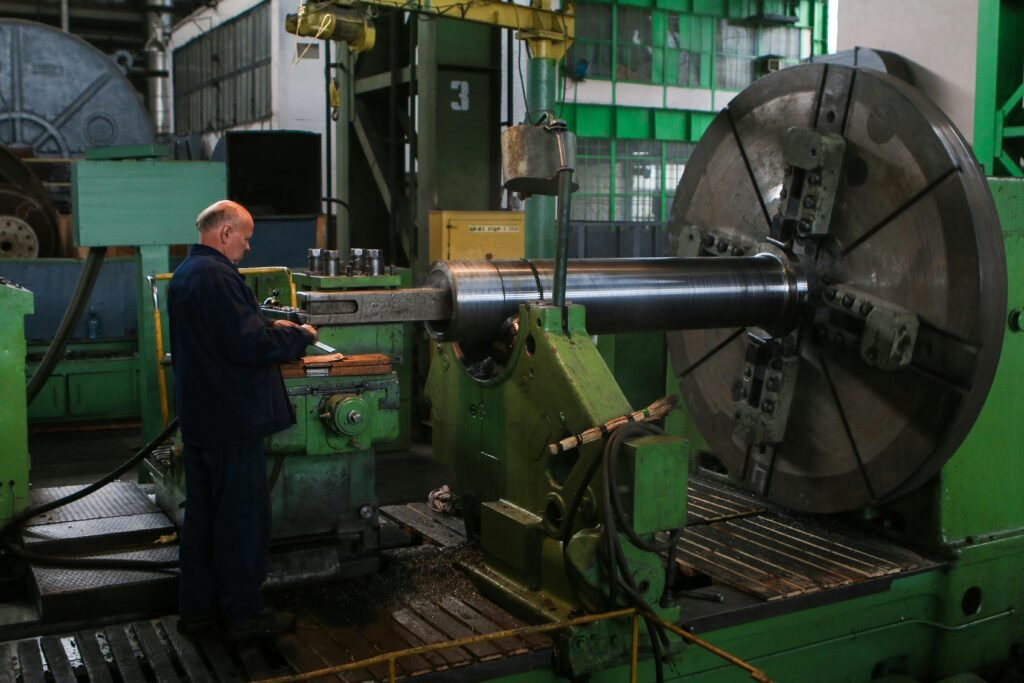
The cylinder barrel is the primary pressure containment vessel. Its design determines the maximum safe operating pressure. For high pressure hydraulic cylinders in oilfield service, the barrel must withstand not only static operating pressure, but also pressure spikes, shock loads, and fatigue from millions of pressure cycles.
Material Specifications: The industry standard for high-pressure barrels is seamless heavy-wall tubing — typically ASTM A513 Type 5 DOM or ST52.3 grade steel. These materials offer minimum yield strengths of 50,000 PSI, providing a substantial safety margin at 5000 PSI. Furthermore, wall thickness calculations follow ASME pressure vessel codes, with Schedule 80 or Schedule 160 wall thicknesses typical for high-pressure service.
Honing and Surface Finish: In addition to material selection, the internal barrel surface requires precision honing to achieve a 16-32 μin Ra surface finish. This smooth surface reduces seal friction and wear while maintaining the oil film needed for proper lubrication. As a result, the honing process creates a plateaued surface structure that improves seal break-in and extends service life.
Single-Piece vs. Multi-Piece Construction: Consequently, high pressure hydraulic cylinders for oilfield applications overwhelmingly use welded, single-piece barrel designs. This eliminates tie-rod stretch and removes potential failure points at tie-rod connections. Welded joints executed per AWS D1.1 with 100% full penetration provide strength integrity that tie-rod designs simply cannot match at extreme pressures.
2. Piston Rod Engineering for Extreme Duty
The piston rod faces unique challenges in high pressure hydraulic cylinders for oilfield service. Side loading from equipment misalignment, corrosion from saltwater and H₂S exposure, and impact from heavy loads all degrade rod performance over time.
Material and Hardness: Standard rods use C1045 carbon steel with hard chrome plating. For high-strength applications, engineers specify 4140 or 4340 alloy steel heat-treated to 42-46 HRC. In corrosive well environments, 17-4 PH stainless steel or advanced coatings provide the necessary protection.
Coating Technology: However, chrome plating remains the standard, with thicknesses of 0.001″–0.003″ and hardness of 65-72 HRC. Modern high pressure hydraulic cylinders in oilfield service increasingly use advanced coatings such as Eatonite laser cladding or ceramic coatings. These options deliver superior corrosion resistance and wear properties, especially in saltwater offshore environments.
Straightness and Surface Finish: Beyond coating selection, the rod must maintain straightness of 0.001″ per foot maximum to prevent seal wear and side loading. A surface finish of 8-16 μin Ra ensures optimal sealing performance. Additionally, superfinishing processes create the plateaued surface needed for extended seal life.
3. Advanced Sealing Systems for High-Pressure Integrity
Seal failure is the most common cause of hydraulic cylinder downtime in oilfield operations. At pressures above 5000 PSI, even minor seal leakage can escalate quickly into catastrophic failure.
Piston Seal Configuration: High pressure hydraulic cylinders for oilfield applications typically use bi-directional PTFE/bronze composite piston seals. These seals operate across a temperature range of -65°F to +275°F and at speeds up to 3 ft/sec. Furthermore, they maintain controlled leakage below 0.1 cc/min at rated pressure and resist extrusion under high pressure.
The composite design combines the low friction of PTFE with the structural support of bronze filler, preventing extrusion at extreme pressures. In addition, anti-extrusion rings provide additional backup and maintain seal geometry during pressure spikes.
Rod Seal Package: The rod seal system is the critical barrier between internal hydraulic fluid and the external environment. At the core sits the primary U-cup seal — typically polyurethane at 90-95 Shore A hardness — which provides excellent sealing performance and wear resistance.
Secondary components complement the primary seal and enhance overall reliability. Specifically, a double-lip wiper prevents contamination ingress while providing secondary sealing. A buffer seal, recommended for high-frequency cycling applications, absorbs pressure spikes. Meanwhile, a metallic scraper deflects heavy contamination before it reaches critical sealing surfaces.
Static Seals: Finally, Viton® (FKM) O-rings provide temperature resistance from -20°F to +400°F. They also offer excellent compatibility with the petroleum-based hydraulic fluids common in oilfield operations.
Performance Specifications: Comparing Pressure Rating Classes
Understanding the differences between pressure rating classes is essential when specifying high pressure hydraulic cylinders in oilfield applications.
| Parameter | Standard Industrial | Heavy-Duty Oilfield | Extreme-Duty HPHT |
|---|---|---|---|
| Operating Pressure | 3,000 PSI (207 bar) | 5,000 PSI (345 bar) | 10,000 PSI (690 bar) |
| Proof Pressure | 4,500 PSI | 7,500 PSI | 15,000 PSI |
| Burst Pressure | 12,000 PSI (827 bar) | 20,000 PSI (1,379 bar) | 40,000 PSI (2,758 bar) |
| Cycle Life Rating | 1,000,000 cycles @ 85% rated | 500,000 cycles @ 100% rated | 250,000 cycles @ 100% rated |
| Temperature Range | -20°F to +180°F | -65°F to +350°F | -100°F to +450°F |
| Filtration Required | 25 micron | 10 micron | 5 micron |
| Contamination Level | ISO 4406 18/16/13 | ISO 4406 20/18/15 | ISO 4406 21/19/16 |
| Typical Bore Range | 1.5″ – 14″ | 4″ – 24″ | 6″ – 36″ |
The 5,000 PSI heavy-duty class is the minimum specification for most oilfield equipment. Extreme-duty ratings apply to HPHT wells and subsea applications.
Key Differentiators: The heavy-duty specification delivers 67% higher operating pressure, 67% higher burst pressure, and a significantly wider temperature range compared to standard cylinders. These are not incremental improvements — they represent fundamental engineering changes that enable reliable oilfield operation.
Case Studies: High Pressure Hydraulic Cylinders in Oilfield Operations
Hypothetical Scenario: Permian Basin Drilling Rig BOP Actuation System
Challenge: A major drilling contractor in the Permian Basin experienced repeated cylinder failures on their BOP actuation systems. Standard 3,000 PSI cylinders were operating at their pressure limit, causing seal extrusion and barrel fatigue during well control operations. Each BOP test failure cost an estimated $250,000 in non-productive time.
Cenbifyn Solution: We engineered a custom high pressure hydraulic cylinder for oilfield BOP service. The design featured a 5,000 PSI continuous operating pressure rating and a heavy-wall ST52.3 seamless barrel. In addition, we specified a 4140 alloy piston rod with Eatonite laser cladding, PTFE/bronze composite piston seals with anti-extrusion rings, and a dual-stage rod sealing package with metallic scraper. Furthermore, full AWS D1.1 welded construction with magnetic particle inspection ensured weld integrity throughout.
We also added enhanced cushioning to absorb shock loads during rapid BOP activation. Additionally, integrated position sensing provided accurate feedback to the drilling control system. Each cylinder underwent 1.5x pressure testing at 7,500 PSI before shipment.
Results: Over 18 months of continuous operation, the upgraded cylinders recorded zero failures across 127 BOP tests. Seal life extended from 6 months to over 24 months. The contractor documented $4.2 million in avoided NPT costs and achieved full regulatory compliance for well control equipment.
Hypothetical Scenario: Offshore Platform Pipe Handling Equipment Upgrade
Situation: An offshore platform in the Gulf of Mexico planned to upgrade pipe handling equipment originally designed for 3,000 PSI operation. Increasing drilling depth capacity required higher lifting forces and correspondingly higher hydraulic pressures.
Considerations for Upgrading: Moving to 5,000 PSI requires complete cylinder replacement — seal upgrades alone are not sufficient. The saltwater atmosphere also demands advanced coating systems. Existing equipment footprint may limit cylinder bore size, which means higher operating pressure becomes necessary to achieve the required force. DNV-GL or API certification is mandatory for offshore equipment, and the existing hydraulic power unit may also need a pressure rating upgrade.
Recommended Approach: Engineering teams should complete a full system analysis — covering force requirements, pressure limitations, safety factors, and regulatory compliance — before specifying high pressure hydraulic cylinders for oilfield offshore applications.
Frequently Asked Questions (FAQ)
Q1: Can standard 3,000 PSI cylinders operate at 5,000 PSI for short durations in oilfield emergencies? A1: No. Pressure ratings represent safe continuous operating limits. Exceeding them — even briefly — risks catastrophic barrel rupture, seal extrusion, or structural failure. Always use equipment rated for the actual operating pressure with appropriate safety factors.
Q2: What safety factor should be applied when specifying high pressure hydraulic cylinders for oilfield service? A2: The industry standard minimum is 4:1 for burst pressure relative to operating pressure. A 5,000 PSI operating cylinder should therefore carry a 20,000 PSI burst pressure rating. Critical well control applications may require 5:1 or higher based on risk assessment.
Q3: How does contamination affect high pressure hydraulic cylinder performance? A3: Contamination is the single greatest cause of premature seal failure in high pressure hydraulic cylinders for oilfield applications. Particles as small as 5 microns cause abrasive wear to seal surfaces. At 5,000 PSI, even minor seal damage leads to rapid extrusion and catastrophic failure. Maintaining ISO 4406 20/18/15 or better cleanliness through proper filtration is essential.
Q4: What testing should high pressure hydraulic cylinders undergo before oilfield deployment? A4: Required testing includes 1.5x proof pressure testing, external leakage testing, 100% dimensional verification, magnetic particle inspection of welds, cycle testing under full pressure, and temperature cycling for extreme environment applications. Third-party certification per API or DNV standards provides additional quality assurance.
Q5: How do I calculate the required bore size for a given force and pressure? A5: Use this formula: Force (lbs) = Pressure (PSI) × Area (in²), where Area = π × (Bore/2)². For oilfield applications, always add a 25% safety factor to the calculated force to account for pressure fluctuations, friction losses, and unexpected load conditions.
Q6: What is the expected service life of high pressure hydraulic cylinders in oilfield operations? A6: Under properly maintained conditions with clean hydraulic fluid, high pressure hydraulic cylinders for oilfield service typically achieve 8,000 hours for rod seals, 10,000 hours for piston seals, 20,000+ hours for chrome rods, and 30,000+ hours for the barrel assembly. Actual service life varies based on operating pressure, cycle frequency, temperature, and maintenance practices.
Q7: Can welded high pressure hydraulic cylinders be repaired in the field? A7: Welded cylinders typically require shop-based repair. Disassembly, seal replacement, and reassembly all need specialized equipment and trained personnel. Some emergency seal repairs are possible in field locations, but comprehensive overhaul should always take place in a controlled shop environment.
Conclusion
High pressure hydraulic cylinders for oilfield applications are specialized engineering solutions that go far beyond standard industrial cylinder designs. Heavy-wall seamless construction, advanced materials, sophisticated sealing systems, and rigorous testing protocols combine to deliver reliable performance at 5,000 PSI and above.
Moreover, poor specification or inadequate maintenance carries consequences well beyond equipment downtime. Hydraulic cylinder performance in oilfield operations directly affects personnel safety, environmental protection, regulatory compliance, and the financial success of drilling and production operations.
Consequently, investing in properly engineered high pressure hydraulic cylinders for oilfield service is not just an operational necessity — it is a business decision that protects both assets and reputation. Engineering teams should therefore evaluate cylinder specification with the same rigor applied to any critical pressure vessel, considering total cost of ownership, not just initial price.
Why Choose Cenbifyn for High Pressure Hydraulic Cylinders Oilfield Solutions?
Specialized Oilfield Engineering Expertise: Our engineering team has over 15 years of experience designing hydraulic solutions for upstream oil and gas operations. As a result, we understand the unique challenges of high pressure hydraulic cylinders for oilfield applications — from BOP actuation to well intervention equipment.
Advanced Material and Coating Technologies: In addition, we offer the full spectrum of corrosion protection, from standard hard chrome plating to Eatonite laser cladding and ceramic coatings. Your cylinders will therefore withstand the most aggressive oilfield environments, including H₂S exposure and saltwater offshore conditions.
Comprehensive Testing and Certification: Furthermore, every cylinder undergoes 1.5x proof pressure testing, magnetic particle inspection, and cycle verification. We consequently provide full documentation packages meeting API, DNV-GL, and ISO certification requirements.
Rapid Response Manufacturing: Moreover, our production facilities deliver custom high pressure hydraulic cylinders for oilfield applications in as little as 4 weeks. Emergency rush service is available for critical downtime situations, backed by an extensive inventory of raw materials and components.
Field Service and Technical Support: Finally, our service team provides on-site installation supervision, maintenance training, and troubleshooting support worldwide. We also offer comprehensive cylinder overhaul and recertification services to extend equipment life.