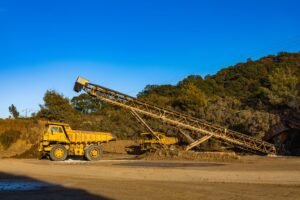
Mining operations rely on hydraulic cylinders mining equipment components to move millions of tons of material safely and efficiently every year. From surface excavators to underground roof supports, hydraulic cylinders provide the force that makes modern mining possible.
Problem: Mining presents unique challenges: extreme shock loads, abrasive contamination, continuous operation, and limited maintenance access. Standard industrial cylinders fail rapidly in these conditions. What design features actually deliver the reliability mining demands?
Answer: Mining hydraulic cylinders require specialized engineering across every dimension: heavy-duty construction, advanced sealing technology, contamination resistance, and shock load absorption capabilities. This guide examines how hydraulic cylinders mining equipment specifications differ from standard industrial designs, what performance criteria matter most, and how proper cylinder selection directly impacts mining productivity and safety.
- Mining Equipment Types and Cylinder Applications
- Key Design Features for Mining Service
- Performance Specifications for Mining Cylinders
- Environmental Factors Affecting Mining Cylinders
- Maintenance Considerations for Mining Cylinders
- Case Studies: Hydraulic Cylinders in Mining Equipment
- Frequently Asked Questions (FAQ)
- Conclusion
- Why Choose Cenbifyn for Mining Hydraulic Cylinders?
Mining is one of the most demanding applications for hydraulic equipment. The combination of heavy loads, shock impacts, abrasive dust, temperature extremes, and continuous operation creates operating conditions that push hydraulic components to their limits.
Understanding hydraulic cylinders mining equipment requirements requires knowledge of structural engineering, seal technology, contamination control, and mining-specific safety standards. This guide provides the technical foundation for specifying cylinders that deliver reliable performance in both surface and underground mining operations.
Mining Equipment Types and Cylinder Applications
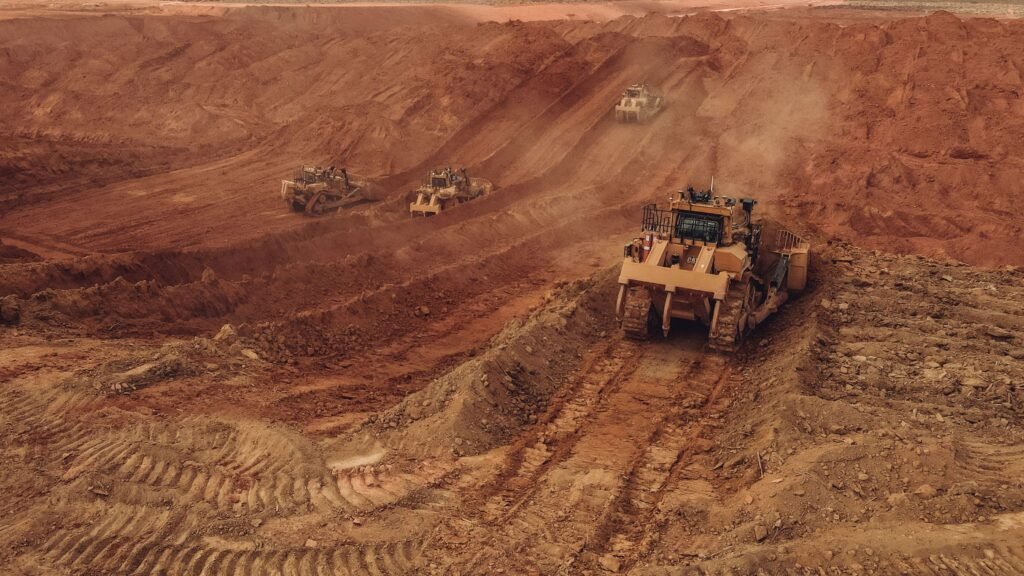
Hydraulic cylinders mining equipment serves critical functions across every mining method and equipment type.
Surface Mining Applications
Hydraulic Excavators: Large mining excavators with bucket capacities of 15-50 cubic meters rely on three primary cylinder types. Boom cylinders provide the lifting force, handling total loads of 200-800 tons at working pressures of 4,500-5,000 PSI. Arm cylinders control the digging motion and must resist both heavy loads and shock impacts during bucket penetration. Bucket cylinders control bucket curl and experience the highest shock loads during material excavation.
Wheel Loaders: Mining loaders use lift, tilt, and steering cylinders. Lift cylinders handle full bucket loads during lifting and transport. Tilt cylinders control bucket angle and experience repeated shock loads during loading cycles. Steering cylinders must maintain precise control even under full load conditions on uneven haul roads.
Haul Truck Body Hoists: Off-highway mining trucks with 100-400 ton payloads use telescopic hoist cylinders operating at 3,000-4,000 PSI. These cylinders extend rapidly to dump material and must resist side loads during body tipping. Reliability is critical — a single hoist cylinder failure can take a $5 million truck out of service for days.
Dozers and Graders: Bulldozers use lift and tilt cylinders for blade control, while graders employ circle lift, side shift, and blade slope cylinders. All must operate reliably in extremely dusty conditions with frequent shock loads from rock impacts.
Underground Mining Applications
Roof Supports (Longwall Mining): Longwall roof supports use hydraulic cylinders to maintain roof pressure and advance with the mining face. These hydraulic cylinders mining equipment components operate at 4,000-5,000 PSI and must maintain constant pressure against the roof. A single cylinder failure can cause roof collapse and endanger personnel. Each longwall face contains 100-200 individual roof supports, each with multiple hydraulic cylinders.
Continuous Miners: These machines use hydraulic cylinders for cutterhead height adjustment, gathering arm operation, conveyor positioning, and tram control. All must operate reliably in dusty, humid underground conditions with limited maintenance access.
Shuttle Cars and Load-Haul-Dump (LHD) Units: Underground haulage equipment uses lift, tilt, and steering cylinders. These cylinders must resist contamination from coal dust and rock particles while handling repeated loading cycles in confined spaces.
Drill Rigs: Both development and production drill rigs use hydraulic cylinders for feed force, boom positioning, and stabilizer deployment. Precision control is essential — even minor cylinder drift compromises drilling accuracy and production rates.
Key Design Features for Mining Service
Hydraulic cylinders mining equipment applications demand specific design features that standard industrial cylinders lack.
Heavy-Duty Construction
Increased Wall Thickness: Mining cylinders use thicker tube walls and larger rod diameters than equivalent industrial cylinders. This provides additional strength for shock loads and allows for increased corrosion allowance during extended service life. Typical tube wall thickness ranges from 0.5-1.5 inches depending on bore size and operating pressure.
Forged Steel Components: Critical components including end caps, pistons, and rod eyes are forged rather than cast. Forging produces a denser, more uniform grain structure that resists fatigue cracking under repeated shock loads. All forged components undergo non-destructive testing including ultrasonic and magnetic particle inspection.
Reinforced Mounting Points: Clevis and trunnion mounts feature extra material and reinforcing ribs. This prevents mounting point failure under side loading conditions that commonly occur in mining equipment.
Shock Load Resistance
Internal Cushioning: Both extend and retract strokes feature adjustable hydraulic cushioning. This decelerates the piston near end of stroke, preventing metal-to-metal impact and reducing transmitted shock loads to the equipment structure. Cushioning is particularly important in haul truck hoist cylinders and excavator bucket cylinders.
Accumulator Integration: Many mining cylinder systems include nitrogen-charged accumulators. These absorb pressure spikes from shock loads and provide make-up fluid during rapid movement cycles. Properly sized accumulators can reduce peak pressure spikes by 30-40%, significantly extending cylinder and pump life.
Rod Oversizing: Hydraulic cylinders mining equipment often use rod diameters larger than strictly required for buckling resistance alone. The extra rod mass provides additional stiffness that helps absorb shock loads and reduces deflection under impact conditions.
Contamination Protection
Multi-Stage Wiper Systems: Mining cylinders typically use double or triple wiper arrangements. The first wiper removes heavy contamination. The second wiper captures finer particles. Some designs include a tertiary labyrinth seal for additional protection against fine dust particles that penetrate the primary wipers.
Protective Rod Boots: Rubber or polyurethane rod boots cover the exposed rod surface during storage and transport. While not practical for continuous operation, boots provide essential protection during equipment transport and storage periods.
Breather Filtration: Cylinder air breathers include high-efficiency filtration rated for mining dust conditions. This prevents airborne contamination from entering the cylinder during pressure changes caused by thermal expansion and contraction.
Material Specifications
Steel Grades: High-strength alloy steels such as 4130, 4140, and 4340 provide the combination of strength and toughness mining applications require. For high-pressure and high-shock applications, 4340 modified with nickel and molybdenum delivers superior fatigue resistance.
Rod Coatings: Hard chrome plating remains common, but HVOF tungsten carbide and laser cladding provide significantly better wear resistance in abrasive mining environments. These coatings maintain surface finish longer, extending seal life and reducing maintenance frequency.
Seal Materials: Polyurethane seals with high abrasion resistance are standard for mining service. For high-temperature applications in deep underground mines, FKM or HNBR materials provide better thermal stability while maintaining sealing performance.
Performance Specifications for Mining Cylinders
| Specification | Standard Industrial | Mining Service | Unit |
|---|---|---|---|
| Typical Operating Pressure | 2,000-3,000 | 4,000-5,000 | PSI |
| Pressure Testing | 1.5x working | 2x working | – |
| Shock Load Capacity | 10-15% overload | 50-100% overload | % |
| Expected Service Life | 10,000-20,000 hours | 30,000-50,000 hours | operating hours |
| Rod Coating Hardness | 65-72 HRC (chrome) | 70-75 HRC (HVOF) | HRC |
| Minimum Safety Factor | 3:1 | 4:1 to 5:1 | ratio |
Mining cylinders operate at significantly higher pressures with substantially larger safety margins than standard industrial designs. The 4:1 minimum safety factor reflects both the critical nature of mining applications and the potential for extreme overload conditions that routinely occur in practice.
Environmental Factors Affecting Mining Cylinders
Mining environments present multiple challenges that hydraulic cylinders mining equipment must overcome.
Abrasive Contamination
Mining operations generate enormous quantities of airborne dust. Coal, silica, iron ore, and copper ore particles range in size from sub-micron to several millimeters. These particles penetrate seal systems and cause abrasive wear on rod surfaces and seal materials. Even minor surface scoring eventually allows contamination ingress into the hydraulic fluid, accelerating pump and valve wear throughout the system.
Proper wiper selection and maintenance is the single most effective countermeasure. Mines operating in highly abrasive conditions typically achieve only 50-70% of the service life experienced in cleaner industrial environments.
Shock and Vibration
Repeated impact loading creates metal fatigue throughout cylinder structures. Excavator bucket cylinders experience shock loads during rock penetration that can momentarily exceed twice the rated working pressure. Haul truck hoist cylinders absorb impact when loaded buckets strike the truck body. Dozer blades transmit shock loads through lift and tilt cylinders when striking buried rock.
All these loads create fatigue stresses that eventually lead to cracking if not properly addressed in the cylinder design. Proper fillet radii, stress relief heat treatment, and forged components all contribute to fatigue resistance.
Temperature Extremes
Surface mining operations in arctic regions experience winter temperatures dropping to -40°F, while desert summer temperatures exceed 120°F. Deep underground mines maintain relatively constant but elevated temperatures of 85-105°F year-round. These temperature extremes affect seal material performance, hydraulic fluid viscosity, and metal fatigue properties.
Seal materials must maintain flexibility at low temperatures while resisting thermal degradation at high temperatures. For extreme cold climate service, special low-temperature polyurethane or HNBR seals are specified instead of standard materials.
Corrosion Environments
Underground coal mines present acidic conditions from sulfur compounds in the coal seam. Copper and uranium mines may have water with high dissolved solids content. Salt mining operations create highly corrosive chloride environments. All these conditions accelerate corrosion on exposed rod surfaces and unprotected cylinder components.
Proper rod coating selection, regular surface washing, and corrosion inhibitor additives in the hydraulic fluid all help mitigate these effects. For especially corrosive environments, stainless steel rod materials or advanced coating technologies may be justified despite the cost premium.
Maintenance Considerations for Mining Cylinders
Effective maintenance directly impacts the service life of hydraulic cylinders mining equipment.
Preventive Maintenance Programs
Regular Inspection: Visual inspection should occur at each scheduled equipment service interval. Technicians look for rod scoring, seal leakage, mounting point wear, and physical damage. Early detection of rod scoring allows seal replacement before contamination enters the hydraulic system.
Seal Replacement: Planned seal replacement at fixed intervals prevents unplanned downtime. Most mining operations schedule seal replacement every 12,000-18,000 operating hours. This interval varies based on operating conditions — highly abrasive environments require more frequent replacement.
Rod Refurbishment: When seals are replaced, rod surfaces should be evaluated for wear and damage. Minor scoring can often be polished out. Significant damage requires re-chroming or re-coating. Maintaining proper rod surface finish is critical for long seal life.
Condition Monitoring Technologies
Pressure Monitoring: Continuous pressure monitoring detects abnormal pressure spikes that indicate developing problems. Trend analysis identifies gradual performance degradation before catastrophic failure occurs.
Leak Detection: Electronic leak detection systems monitor for external seal leakage. Some advanced systems also monitor internal leakage by measuring piston drift over time under load conditions.
Vibration Analysis: Vibration sensors detect developing mechanical problems including bearing wear, loose components, and structural cracking. This technology is particularly valuable on large excavators and shovels where cylinder failure has major production consequences.
Overhaul and Remanufacturing
Most mining cylinders are designed for multiple overhaul cycles. A complete overhaul begins with full disassembly and thorough cleaning of all components. Technicians then perform tube honing or re-sleeving if wear or scoring has compromised the internal surface finish. Rod refurbishment follows, including grinding to restore surface geometry and re-coating if the original coating shows significant wear.
The overhaul continues with complete seal replacement using genuine manufacturer components, followed by piston and bearing replacement to ensure proper internal clearances. Pressure testing to 1.5x working pressure verifies sealing integrity and structural soundness. The process concludes with comprehensive quality documentation covering all inspection results, material certifications, and test data.
Properly remanufactured cylinders typically perform as well as new units at 50-70% of the new cylinder cost.
Case Studies: Hydraulic Cylinders in Mining Equipment
Hypothetical Scenario: Copper Mine Excavator Cylinder Upgrade
Challenge: An open-pit copper mine operating a fleet of eight 300-ton excavators experienced chronic bucket cylinder failures. Standard hard chrome plated cylinders lasted only 8,000-10,000 hours before abrasive wear caused seal failure. Each cylinder replacement cost approximately $35,000 plus 24-48 hours of downtime.
Cenbifyn Solution: We designed hydraulic cylinders mining equipment with HVOF tungsten carbide rod coatings rated for 1,000+ hours of salt spray resistance, combined with a multi-stage polyurethane wiper system and metallic scraper for contamination exclusion. The structural design used 4340 forged steel construction throughout, with internal hydraulic cushioning at both stroke ends to absorb shock loads. Additionally, enhanced gland drainage prevented dust accumulation at the seal interface.
Results: After 24 months in service, the upgraded cylinders showed no measurable wear and no seal failures. The mine projected total service life extension to 28,000-32,000 hours — approximately three times the previous service life. Annual savings across the eight-machine fleet exceeded $1.8 million in parts and downtime costs.
Hypothetical Scenario: Longwall Roof Support Cylinder Reliability Improvement
Challenge: An underground longwall coal mine experienced chronic roof support cylinder leakage. The mine operated 168 supports across a 300-meter face, and approximately 15-20 cylinders required replacement each month. The frequent replacements disrupted production and created safety concerns during underground maintenance work.
Cenbifyn Solution: We developed hydraulic cylinders mining equipment with a triple wiper system — primary polyurethane, secondary fabric-reinforced, and tertiary labyrinth seals — to progressively block coal dust ingress. Electroless nickel rod coating with PTFE impregnation provided low friction and corrosion resistance. Furthermore, the enhanced gland design increased seal spacing, and a modified breather system with HEPA-grade filtration prevented airborne contamination from entering the cylinder.
Results: Cylinder replacement frequency dropped to 2-3 units per month — an 85% reduction. The improvement eliminated approximately 100 hours of monthly underground maintenance time and reduced safety exposure for maintenance personnel. The mine calculated total annual savings at $2.4 million including parts, labor, and production gains.
Hypothetical Scenario: Haul Truck Hoist Cylinder Shock Load Failure Resolution
Situation: A gold mining operation operating twelve 240-ton haul trucks experienced repeated hoist cylinder piston rod breakage. Failure analysis revealed fatigue cracking initiated at the piston-to-rod interface. Each failure required complete cylinder replacement and resulted in 3-5 days of truck downtime.
Root Cause Analysis: The truck loading procedure created severe shock loads when 25-ton buckets dropped material from 10-15 feet above the truck body. These shock loads created pressure spikes exceeding 120% of rated working pressure, well beyond the original cylinder design capacity. Repeated loading cycles initiated fatigue cracks at stress concentration points.
Cenbifyn Solution: We redesigned the hydraulic cylinders mining equipment with an increased rod diameter providing 40% additional cross-sectional area, paired with a 4340 forged steel piston featuring optimized stress relief geometry. A nitrogen-charged accumulator system integrated into the hoist circuit absorbed pressure spikes before they reached the cylinder. Additionally, an enhanced heat treatment process reduced residual stresses throughout the rod and piston assembly.
Results: After 18 months of operation with the redesigned cylinders, the mine recorded zero rod failures. The accumulator system reduced peak pressure spikes by 38% as measured by onboard pressure monitoring. The mine estimated annual savings of $3.1 million in cylinder replacement costs and avoided production losses.
Frequently Asked Questions (FAQ)
Q1: What is the typical service life of hydraulic cylinders in mining applications? A1: Service life varies dramatically by application type and operating conditions. Surface excavator bucket cylinders typically achieve 12,000-20,000 hours. Longwall roof support cylinders in underground coal mines average 20,000-30,000 hours with proper maintenance. Haul truck hoist cylinders achieve 25,000-40,000 hours. All these figures assume regular maintenance and proper wiper replacement intervals.
Q2: How important is rod coating selection for mining cylinder performance? A2: Rod coating selection is perhaps the single most important specification decision for mining cylinders. Abrasive wear from mining dust is the leading cause of cylinder failure. Standard hard chrome plating provides only moderate wear resistance. HVOF tungsten carbide coatings typically provide 2-3x longer service life, and laser cladding can extend service life even further. The incremental coating cost is almost always justified by reduced downtime and lower maintenance costs.
Q3: What safety standards apply to hydraulic cylinders in mining equipment? A3: Key standards include MSHA requirements in the United States, ISO 13485 for mining machinery safety, EN 1804 for underground mining machinery, and various national mining authority regulations. These standards mandate minimum safety factors, pressure testing requirements, material traceability, and quality documentation. Always verify that cylinder suppliers provide complete documentation supporting compliance with applicable mining safety standards.
Q4: Can mining cylinders be safely rebuilt multiple times? A4: Yes — most heavy-duty mining cylinders are designed for 2-4 complete overhaul cycles during their total service life. Each overhaul typically includes seal replacement, rod refurbishment, tube honing, and piston replacement. Critical structural components should receive non-destructive testing during each overhaul to detect any developing fatigue cracking. Properly rebuilt cylinders perform equivalently to new units at substantially lower cost.
Q5: How do I determine if shock loads are causing cylinder damage? A5: Evidence of shock load damage includes piston rod bending, piston nut loosening or breakage, end cap deformation, seal extrusion from pressure spikes, fatigue cracking at welds or stress concentration points, and accelerated tube wear near stroke ends. Installing pressure recording equipment can confirm abnormal pressure spikes. If shock loads are confirmed, adding accumulators and internal cushioning are the most effective mitigation strategies.
Q6: What maintenance practices most effectively extend mining cylinder life? A6: The most critical maintenance practice is maintaining clean rod surfaces. Regular pressure washing removes accumulated dust and prevents abrasive particles from damaging wipers and seals. Scheduled wiper replacement — before wear allows contamination ingress — is essential. Monitoring hydraulic fluid cleanliness provides early warning of developing seal problems. Training maintenance personnel to recognize early signs of cylinder wear also contributes significantly to extended service life.
Q7: How do underground mining cylinder requirements differ from surface mining? A7: Underground cylinders typically face higher dust concentrations, more confined spaces that limit maintenance access, constant humidity that promotes corrosion, and additional safety requirements related to roof support and explosion protection in gassy mines. Surface cylinders must handle larger absolute loads and more extreme temperature variations. Both applications require heavy-duty construction, but the specific failure modes and optimization priorities differ significantly.
Conclusion
Hydraulic cylinders mining equipment represents a specialized class of hydraulic component engineered specifically for the extreme conditions of mining operations. These cylinders differ from standard industrial designs in virtually every dimension: operating pressure, safety factors, material selection, sealing technology, contamination protection, and shock load resistance.
The cost of cylinder failure in mining is substantial. A single excavator cylinder failure can halt production and cost hundreds of thousands of dollars in lost output. Underground cylinder failures create additional safety risks for personnel working in confined spaces. Investing in properly specified hydraulic cylinders mining equipment with appropriate coatings, sealing systems, and structural design pays for itself many times over through extended service life and reduced downtime.
As mining operations continue to move to deeper deposits and handle larger material volumes, the demands on hydraulic cylinders will only increase. Advanced coating technologies, seal materials, and condition monitoring capabilities will continue to evolve to meet these growing demands.
Why Choose Cenbifyn for Mining Hydraulic Cylinders?
Mining-Specific Design Expertise: Our engineering team has extensive experience designing hydraulic cylinders mining equipment for both surface and underground applications. We understand the unique failure modes and performance requirements of mining service and optimize every design accordingly.
Advanced Coating Capabilities: We maintain in-house HVOF thermal spray, laser cladding, and electroless nickel plating facilities. This gives us complete quality control over rod coatings — the single most critical factor in mining cylinder service life. All coatings are tested per ASTM standards before shipment.
Comprehensive Testing Facilities: Our test facility performs pressure testing to 10,000 PSI, fatigue testing with one million+ load cycles, shock load simulation, salt spray corrosion testing, and temperature cycling from -40°F to +250°F. We can validate cylinder performance under conditions that closely simulate actual mining environments.
Mining Safety Certification Support: We provide complete documentation packages for MSHA, ISO, and various national mining safety authority requirements. Our quality system maintains full material traceability from melt to finished cylinder.
Field Service and Overhaul Capabilities: Our service teams provide on-site cylinder inspection, maintenance, and overhaul services at mining locations worldwide. We also offer remanufacturing services that restore your existing cylinders to new condition at a fraction of replacement cost.