When hydraulic systems fail in an offshore platform, the consequences extend far beyond simple equipment downtime. A single unplanned shutdown on a deepwater drilling operation can cost operators over $1 million per day. This stark reality explains why hydraulic cylinders in oil and gas applications demand such meticulous engineering and selection criteria.
If you manufacture or specify hydraulic cylinders for the petroleum industry, understanding the unique challenges of these environments is essential for delivering reliable equipment. This article explores how hydraulic cylinders function across critical oil and gas applications, the material considerations that separate industrial-grade components from petroleum-rated equipment, and the standards that govern their performance.
- How Hydraulic Cylinders Power Oil and Gas Operations
- Critical Applications in Drilling Operations
- Pipeline Control and Valve Actuation Systems
- Material Selection for Harsh Environments
- Industry Standards and Certification Requirements
- Case Studies from the Field
- Frequently Asked Questions
- Conclusion
- Why Choose Cenbifyn
How Hydraulic Cylinders Power Oil and Gas Operations
Hydraulic cylinders serve as the mechanical workhorses in oil and gas operations, converting fluid pressure into linear force and motion. In petroleum applications, these cylinders face conditions that would destroy standard industrial equipment within hours.
The fundamental operating principle remains consistent across applications: pressurized hydraulic fluid enters the cylinder barrel, acting against a piston to generate linear motion. However, oil and gas environments introduce variables that fundamentally alter design requirements. Temperature extremes ranging from -40°C in Arctic conditions to 200°C+ in geothermal wells, exposure to sour gases containing hydrogen sulfide (H2S), saltwater corrosion in marine environments, and pressure differentials exceeding 10,000 PSI in deepwater applications all demand specialized engineering.
Hydraulic cylinders in oil and gas applications must maintain precise dimensional tolerances despite these harsh conditions. A seal failure in a subsea Christmas tree valve actuator can result in catastrophic well control issues, making reliability the paramount selection criterion.
Key Performance Parameters for Petroleum Hydraulic Cylinders
| Parameter | Typical Range | Application Notes |
|---|---|---|
| Operating Pressure | 3,000 – 10,000 PSI (20-70 MPa) | Deepwater applications require higher ratings |
| Temperature Range | -40°C to +180°C | Extended range for geothermal applications |
| Bore Size | 50mm – 300mm | Larger bores for high-force applications |
| Stroke Length | 100mm – 3,000mm+ | Extended strokes for riser tensioning |
| Corrosion Resistance | NACE MR0175 compliant | Required for H2S environments |
| Seawater Resistance | ASTM B117 testing | Minimum 2,000 hour salt spray rating |
Critical Applications in Drilling Operations
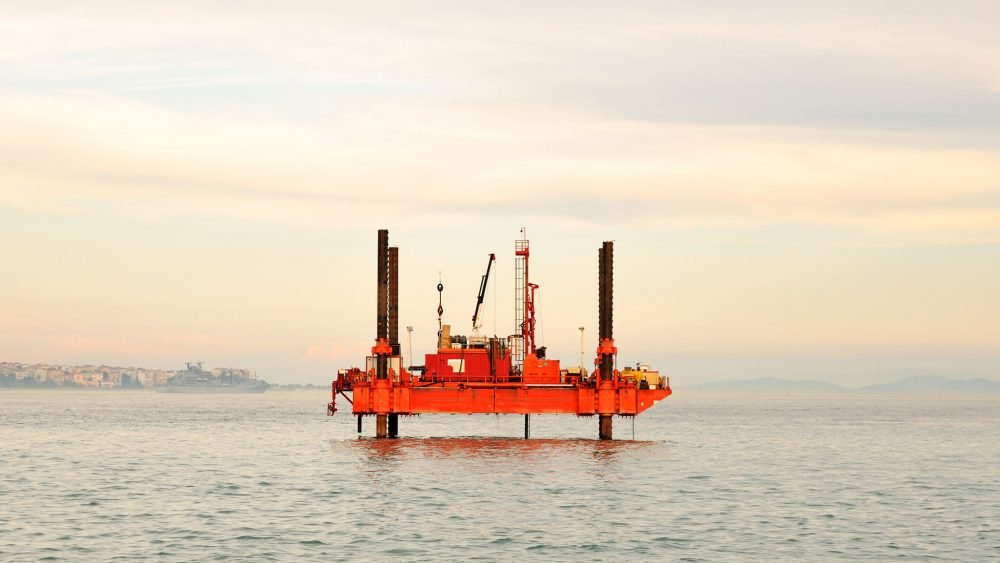
Drilling operations represent the most demanding application environment for hydraulic cylinders in the petroleum industry. The continuous operation cycles, abrasive cuttings, and aggressive drilling fluids create an environment where equipment failure is not merely inconvenient but potentially dangerous.
Top Drive Systems
Modern drilling rigs utilize electro-hydraulic top drive systems that employ multiple hydraulic cylinders for pipe handling, torque reaction, and brake actuation. These cylinders must operate reliably through millions of cycles while maintaining sub-millimeter positioning accuracy.
The hydraulic cylinders in oil and gas top drive applications are engineered for the specific demands of continuous drilling operations. Double-acting cylinders provide precise bi-directional control, while integrated position sensors in the cylinder body enable closed-loop positioning feedback. To withstand the relentless operating cycles of active drilling, these cylinders use high-cycle seals rated for 10,000+ hours of continuous operation, combined with wear-resistant bore coatings that defend against abrasive particle ingestion from the drilling environment.
Rotary Tables and Swivel Systems
The rotary table drive system utilizes hydraulic cylinders for braking and anti-rotation functions. These cylinders experience shock loads during drilling string connections and must maintain engagement under vibration conditions that would cause conventional cylinders to “walk” out of position.
These cylinders require spring-return capability to ensure fail-safe braking engagement when hydraulic pressure is lost. Integrated damping controls manage deceleration rates during emergency stops, preventing the mechanical shock that could damage drill string components. Integral holding valves are essential to maintain brake engagement position if system pressure is unexpectedly lost during a hold operation.
BOP Actuator Systems
Blowout preventer (BOP) hydraulic cylinders represent perhaps the most critical application in drilling operations. These massive actuators must close shear rams within milliseconds to prevent well control incidents. The reliability requirements approach absolute certainty.
| BOP Cylinder Specification | Typical Requirement | Standard |
|---|---|---|
| Closing Time | < 3 seconds | API 16A |
| Emergency Operating Pressure | 3,000 PSI (21 MPa) | API 16D |
| Closing Ratio | 4:1 minimum | API 16A |
| Proof Pressure Test | 1.5x rated pressure | API 16A |
| Seismic Rating | Zone 2 or Zone 4 | NORSOK D-001 |
Pipeline Control and Valve Actuation Systems
Pipeline infrastructure relies heavily on hydraulic cylinder actuators for valve operation, pig launching, and compressor station equipment. These applications span both onshore and offshore pipeline networks, each with distinct operational requirements.
Subsea Valve Actuators
Subsea hydraulic cylinder applications present unique engineering challenges. At depths exceeding 3,000 meters, ambient pressure approaches 30 MPa, requiring special compensation techniques. The cylinders must function reliably for 20+ year design lifetimes without maintenance access.
Corrosion Resistance: The cylinder body and all external components must withstand constant seawater immersion. Duplex stainless steel (UNS S31803 or S32205) or super duplex grades provide the necessary corrosion resistance. Surface treatments including cathodic protection compatibility ensure long-term integrity.
Pressure Compensation: Subsea cylinders typically employ oil-filled bellows or bladder systems that equalize internal pressure with ambient seawater pressure. This eliminates the differential pressure stress that would otherwise collapse the cylinder under deepwater conditions.
Field-proven Sealing Systems: The seal compounds must function under pressure compensation while maintaining integrity across temperature cycles. FKM (Viton) compounds modified for subsea service provide the best balance of chemical resistance and low-temperature flexibility.
Pipeline Pneumatic-Hydraulic Actuators
While technically pneumatic systems, many pipeline valve actuators use pneumatic supply to pressurize hydraulic cylinders for the actual work output. This combination provides the rapid response of pneumatic systems with the precise force control of hydraulics.
These systems require hydraulic cylinders with low-friction seals to maximize efficiency in pneumatic-hydraulic power units. Wide temperature operating windows accommodate the full range of surface pipeline ambient conditions, and modular mounting configurations allow these cylinders to interface with standardized actuator housings across multiple valve platforms.
Material Selection for Harsh Environments
The material choices in hydraulic cylinders for oil and gas directly determine service life and reliability. Understanding the performance envelope of each material option allows engineers to specify cost-effective solutions without sacrificing necessary performance.
Cylinder Body Materials
Carbon Steel (4140, 4340): Standard carbon steel remains viable for many non-corrosive applications. However, without proper coating or plating, carbon steel is unsuitable for H2S service or marine environments. When carbon steel is used, protective coating systems are essential. Common options include electroless nickel plating at 50–75 μm thickness, hard chrome plating at 25–50 μm, and thermal spray aluminum (TSA) coating—each offering a different balance of wear resistance, corrosion protection, and cost.
Stainless Steel (316L, 17-4 PH): Austenitic stainless steel provides baseline corrosion resistance for moderate environments. Precipitation-hardened grades like 17-4 PH offer superior strength for high-pressure applications while maintaining corrosion resistance superior to carbon steel alternatives.
Duplex and Super Duplex Stainless: For the most demanding environments, duplex stainless steel (22-25% chromium, 4-7% molybdenum) provides exceptional corrosion resistance combined with high yield strength. Super duplex grades (25% chromium, 7% molybdenum) offer further performance improvements for the most aggressive service conditions.
| Material | Yield Strength | Corrosion Resistance | Temperature Limit | Cost Index |
|---|---|---|---|---|
| Carbon Steel 4140 | 415 MPa | Low (requires coating) | 150°C | 1.0 |
| 316L Stainless | 170 MPa | Good | 200°C | 2.5 |
| 17-4 PH Stainless | 1,000 MPa | Good | 300°C | 3.2 |
| Duplex 2205 | 450 MPa | Very Good | 250°C | 3.8 |
| Super Duplex 2507 | 550 MPa | Excellent | 280°C | 4.5 |
Seal Compound Selection
Seal material selection for hydraulic cylinders in oil and gas applications requires careful consideration of fluid compatibility, temperature exposure, and pressure ratings.
NBR (Nitrile Rubber): Standard NBR seals provide adequate performance for petroleum-based hydraulic fluids at temperatures up to 100°C. However, NBR exhibits poor resistance to H2S and sour gas environments, limiting its applicability in upstream petroleum applications.
FKM (Fluoroelastomer/Viton): FKM compounds offer excellent resistance to petroleum fluids, sour gases, and high temperatures. Standard FKM grades operate reliably to 200°C, with specialty grades extending to 250°C. These materials are the default choice for most oil and gas hydraulic cylinder applications.
HNBR (Hydrogenated Nitrile): HNBR provides improved temperature resistance and H2S resistance compared to standard NBR. This material balances cost-effectiveness with performance for moderate sour gas service applications.
PTFE (Polytetrafluoroethylene): PTFE backup rings and seal components provide chemical inertness and wide temperature operating ranges (-200°C to +260°C). However, PTFE’s cold flow characteristics require careful gland design, typically using PTFE backup rings in combination with elastomeric energizers.
Surface Finish Requirements
Cylinder bore surface finish directly impacts seal life and operational efficiency. The Ra (roughness average) specification determines how smoothly the piston seal rides against the cylinder bore.
| Application | Required Ra | Notes |
|---|---|---|
| General Industrial | 0.4-0.8 μm | Standard hydraulic service |
| High-pressure Oil & Gas | 0.2-0.4 μm | Reduces seal wear |
| Subsea Service | 0.1-0.2 μm | Minimizes contamination risk |
| Abrasive Service | 0.8-1.6 μm with hard coating | Chrome or ceramic overlay |
Industry Standards and Certification Requirements

The oil and gas industry operates under rigorous standards that govern equipment design, testing, and certification. Hydraulic cylinders intended for petroleum applications must comply with relevant standards to ensure interoperability and safety.
API Standards
The American Petroleum Institute publishes numerous standards relevant to hydraulic cylinders:
API 6A (Wellhead and Christmas Tree Equipment): This standard governs the design and testing of wellhead equipment, including hydraulic actuators for Christmas tree valves. Cylinders must pass stringent hydrostatic testing and material verification requirements.
API 16D (Control Systems for Drilling Control Systems and Equipment): Applicable to BOP control systems, this standard specifies requirements for hydraulic cylinders used in blowout preventer actuation. Requirements include minimum operating pressures, closing time specifications, and reliability demonstration.
API 11IW (Performance Validation of Sucker Rod Pump Components): While focused on pump components, this standard provides testing protocols applicable to hydraulic cylinder endurance validation.
NORSOK Standards
NORSOK standards originate from the Norwegian petroleum industry and carry significant weight in global offshore specifications:
NORSOK M-710 (Qualification of Non-metallic Sealing Materials and Manufacturers): This standard establishes qualification requirements for elastomeric sealing materials used in hydrocarbon service. Materials must demonstrate resistance to oil-based and synthetic drilling fluids, sour gas exposure, and temperature cycling.
NORSOK D-001 (Storage and Handling of Equipment): Relevant for hydraulic cylinder storage requirements before installation.
ISO Standards
ISO 3601 (Fluid Power Systems – O-Rings): Defines O-ring dimensions and material requirements for hydraulic cylinder sealing systems.
ISO 6020 (Hydraulic Cylinders): Establishes dimensional standards and performance criteria for industrial hydraulic cylinders, with specific annexes addressing petroleum industry applications.
Material Certification Requirements
Hydraulic cylinders for oil and gas must be accompanied by comprehensive material documentation. This includes heat lot traceability from raw material through the finished component, chemical composition verification confirming alloy specifications, and mechanical property test reports demonstrating strength and hardness. For H2S service, NACE MR0175/ISO 15156 compliance documentation is mandatory. Installations in Europe additionally require Pressure Equipment Directive (PED) certification.
Case Studies from the Field

Case Study 1: Deepwater Christmas Tree Hydraulic Actuator Upgrade
Hypothetical Scenario
A deepwater production operator in the Gulf of Mexico experienced repeated failures of subsea Christmas tree hydraulic actuator cylinders. Original equipment featured 316L stainless cylinders with standard FKM seals, but H2S-containing well fluids caused premature seal degradation.
Solution: Cenbifyn engineered a replacement cylinder using super duplex 2507 body material with HNBR primary seals and PTFE backup rings. The redesigned actuator incorporated a pressure compensation system suitable for 1,500m water depth.
Results: The upgraded cylinders demonstrated zero failures over a 36-month monitoring period, compared to previous mean time between failures of 8 months. The higher initial investment in corrosion-resistant materials delivered substantial savings in intervention vessel costs and production deferment.
Case Study 2: Onshore Gas Processing Plant Piston Rod Failure Investigation
Hypothetical Scenario
A gas processing facility in Texas experienced hydraulic cylinder failures on natural gas pipeline actuators at a compressor station. Investigation revealed that the failures were not due to seal degradation but rather stress corrosion cracking initiating from the piston rod surface.
Root cause analysis identified that the chrome-plated piston rods were suffering from pitting corrosion at chrome pinholes. The humid, H2S-containing atmosphere at the compressor station accelerated crack propagation once initiated.
Resolution: The facility standardized on hard chrome-plated rods with enhanced quality inspection including holiday testing and 100% fluorescent penetrant inspection. Additionally, the specification was updated to require minimum 50μm chrome thickness with documented quality verification.
Case Study 3: North Sea Platform Hydraulic System Optimization
Hypothetical Scenario
A North Sea platform operator sought to optimize hydraulic system performance for platform crane hydraulic cylinders. The existing equipment suffered from excessive seal wear attributed to high system pressure (4,500 PSI) combined with hydraulic fluid contamination.
Engineering analysis revealed that the contamination levels in the platform hydraulic system exceeded ISO 4406 cleanliness code 20/18/15, well above the 16/14/11 recommended for high-pressure applications.
Solution: Beyond replacing the affected cylinders with higher-capacity filtration and contamination monitoring, Cenbifyn specified cylinders with proprietary low-friction seal compounds and larger drain ports to reduce seal stress during pressure transients.
Results: Seal life extended from 4,000 operating hours to over 12,000 hours following the combined approach of fluid cleanliness improvement and seal optimization.
Frequently Asked Questions
What pressure ratings are required for hydraulic cylinders in oil and gas drilling applications?
Drilling applications typically require hydraulic cylinders rated for 3,000 to 5,000 PSI operating pressure with proof pressures of 1.5x rated pressure. BOP actuator cylinders may require ratings up to 10,000 PSI depending on system design. API 16D specifications govern BOP control system cylinders and mandate minimum 3,000 PSI pressure ratings for standard applications.
How do I specify hydraulic cylinders for H2S service?
For H2S service, specify materials compliant with NACE MR0175/ISO 15156. Elastomeric seals should be HNBR or FKM compounds specifically qualified for sour gas exposure. Document all material certifications and require supplier quality verification documentation. Avoid standard NBR seals, carbon steel components without protective coating, and copper-containing alloys in H2S service.
What is the typical service life of hydraulic cylinders in offshore environments?
Well-designed hydraulic cylinders in offshore applications achieve service lives of 15-25 years with scheduled maintenance. Subsea cylinders may be specified for 20+ year design lives without maintenance access. Factors affecting service life include material selection, sealing system quality, contamination control, and operating temperature exposure.
How do I calculate the required force for a hydraulic cylinder application?
Cylinder force is calculated as pressure multiplied by piston area. For extension force: F = P × (π × D²) / 4, where P is pressure and D is bore diameter. For retraction force, subtract the piston rod area from the full bore area: F = P × (π × (D² – d²)) / 4. Always apply appropriate safety factors (typically 1.5-2.0x) for dynamic loads and consider system pressure losses.
What testing should be witnessed or documented for critical oil and gas hydraulic cylinders?
Critical applications require witnessed pressure testing (hydrostatic to 1.5x rated pressure), seal performance testing, dimensional verification, material test reports (MTRs), and NDE examination for weldments. For subsea applications, require FAT (Factory Acceptance Testing) documentation including function and leak testing. API 6A and API 16D specify mandatory testing requirements for wellhead and BOP cylinders respectively.
Conclusion
Hydraulic cylinders in oil and gas applications operate under conditions that demand engineering excellence at every level. From material selection through sealing technology to dimensional precision, each component decision impacts system reliability. The standards governing petroleum industry equipment exist because equipment failures in these environments carry unacceptable safety and economic consequences.
Understanding the specific challenges of drilling operations, pipeline control systems, and offshore environments allows engineers to specify hydraulic cylinders that deliver decades of reliable service. The investment in quality materials, appropriate seal compounds, and rigorous testing protocols pays dividends through eliminated unplanned downtime and extended maintenance intervals.
For equipment manufacturers and specifiers, partnering with hydraulic cylinder suppliers who understand petroleum industry requirements ensures that specifications translate into field-proven performance.
Why Choose Cenbifyn
Cenbifyn specializes in engineering and manufacturing hydraulic cylinders purpose-built for petroleum industry applications. Our cylinders incorporate materials and sealing systems specifically selected for oil and gas service, with full traceability and certification documentation.
Our petroleum industry capabilities include:
- API 6A and API 16D compatible cylinder designs for wellhead and BOP applications
- H2S service qualified materials compliant with NACE MR0175/ISO 15156
- Subsea pressure-compensated cylinder designs for depths to 3,000 meters
- Extended temperature range seals spanning -50°C to +200°C operation
- Comprehensive testing services including witnessed hydrostatic testing and function testing
- Material certification packages meeting major operator and EPC specifications
Our engineering team works directly with equipment manufacturers and operators to understand application requirements and deliver hydraulic cylinders that meet the demanding specifications of the petroleum industry. Contact us to discuss your hydraulic cylinder requirements for oil and gas applications.
Ready to specify hydraulic cylinders for your petroleum application? Our engineering team is available to review your requirements and recommend optimized solutions.