For engineering teams, achieving reliable Hydraulic Sealing for Oil and Gas equipment is the foundation of system safety in extreme environments.
Problem: Does frequent leakage in hydraulic systems solely stem from poor seal quality?
Answer: Not necessarily. Failure often originates from “incorrect selection” rather than “quality defects.” This guide analyzes how to scientifically select and apply Hydraulic Sealing for Oil and Gas across 7 critical dimensions—from chemical compatibility to high-pressure endurance—ensuring your arctic rigs or deep-sea pumps operate without failure.
In extreme applications such as oil and gas, offshore engineering, and polar exploration, hydraulic systems are often exposed to multiple stresses: temperature fluctuations from -50°C to +150°C, corrosive media (H₂S/CO₂), high-pressure pulsations, and salt spray erosion. Conventional sealing solutions are highly prone to hardening, cracking, swelling, or extrusion failure, leading to system leakage, unplanned downtime, and even catastrophic safety incidents.
How can these risks be mitigated during the initial design phase? How can a high-performance sealing system achieve full-chain control across material selection, structural design, installation, and verification? Based on 15 years of expertise in high-end sealing engineering, the Cenbifyn team reveals the scientific logic behind ultra-reliable sealing systems.
Typical Challenges for Hydraulic Sealing in Extreme Environments
| Operating Conditions | Primary Impact | Typical Failure Modes |
|---|---|---|
| Extreme Low Temperature (<-40°C) | Material Vitrification (Glass Transition) & Loss of Elasticity | Seal Hardening, Insufficient Recovery, and Startup |
| High Temperature (>120°C) | Polymer Aging & Compression Set | Seal Relaxation & Clearance Leakage |
| Sour Gas Environment (H₂S/CO₂) | Chemical Corrosion & Material Degradation | Seal Swelling, Cracking, & Pitting Corrosion of Metal Parts |
| High Salt Spray (Offshore Platforms) | Electrochemical Corrosion & Fretting Wear | Seal Lip Wear & Seizing/Rusting of Mating Surfaces |
| High Pressure Pulsation (>35MPa) | Extrusion Gap Expansion & Material Creep | Seal Extrusion & Tearing |
These issues do more than just shorten seal service life; they are highly likely to trigger cascading failures—such as hydraulic fluid contamination, damage to the cylinder bore surface, and the triggering of safety interlock shutdowns.
7 Critical Dimensions & Technical Essentials for Seal Selection
(1) Dimension 1: Media Compatibility Analysis
- Critical Actions: Clearly define the hydraulic fluid type (mineral oils, synthetic esters, phosphate esters, etc.) and contaminant parameters (H₂S concentration, water content, and particle cleanliness levels).
- Technical Standards: Conduct material immersion tests according to ASTM D471 or ISO 1817. Target requirements: volume change rate <10% and hardness change ≤±5 Shore A.
- Recommended Materials:
- Standard Mineral Oils: Nitrile Butadiene Rubber (NBR)
- Synthetic Oils / High-Temp Scenarios: Fluorocarbon (FKM), Perfluoroelastomer (FFKM)
- H₂S Corrosive Environments: Hydrogenated Nitrile (HNBR), Ethylene Propylene Diene Monomer (EPDM)
(2) Dimension 2: Temperature Range Matching
- Technical Note: Distinguish between “Continuous Operating Temperature” and “Short-term Peak Temperature” to avoid selection errors based on a single metric.
- Selection Guidelines:
- -50°C to +120°C: Low-temperature grade HNBR (Glass Transition Temperature Tg ≤ -55°C)
- +150°C to +200°C: FKM or PTFE composite seals
- Ultra-High Temp Pulse Scenarios: Metal seals with elastomeric secondary elements
(3) Dimension 3: Pressure and Velocity (PV) Adaptation
For dynamic seals, it is critical to control the PV value (Pressure × Velocity):
- High Speed / Low Pressure: Prioritize low-friction PTFE lip seals (e.g., Glyd Rings).
- Low Speed / High Pressure: Utilize anti-extrusion back-up rings combined with high-hardness NBR/FKM (Hardness 90 Shore A).
(4) Dimension 4: Groove Design and Tolerance Control
- Surface Roughness (Bore/Rod): Ra 0.1–0.4 μm (Excessive roughness causes seal abrasion; insufficient roughness prevents essential oil film formation).
- Lead-in Chamfers: Must be ≥ 0.3 mm to prevent damage to the seal lips during assembly.
- Clearance Control: Precisely calculate the Maximum Allowable Extrusion Gap based on ISO 3601 or specific client standards.
(5) Dimension 5: Seal Profile and Structural Configuration
| Application Scenarios | Recommended Configurations |
|---|---|
| Piston Seal (Double-acting) | Bud Seal + Support Ring / DKB Combination Seal |
| Piston Rod Seal (Wiper + Primary Seal) | Double-lip Wiper Seal + U-cup or Step Seal (Primary) |
| Static Seal (End Cap, Flange) | O-Ring + Back-up Ring / Spiral Wound Gasket |
(6) Dimension 6: Installation Process Control
- Specialized Tooling: Utilize dedicated guiding sleeves; do not stretch, pull, or twist the seal lips directly.
- Pre-assembly Lubrication: Apply a uniform layer of compatible grease (e.g., Krytox or Mobil SHC) before assembly.
- Force & Speed Control: Monitor assembly speed and force to prevent permanent deformation caused by “cold flow” effects.
(7) Dimension 7: Life Verification and Field Monitoring
- Accelerated Aging Tests: Simulate real-world operating conditions including hot air aging, media immersion, and pressure cycling in the laboratory.
- Field Monitoring: Conduct regular infrared thermography, leakage logging, and oil contamination testing (compliant with ISO 4406 standards).
- Life-cycle Management: Establish a seal replacement cycle model based on “Total Operating Hours + Operating Condition Coefficients.”
Industry Case Studies
Case Study 1: Middle Eastern Desert Oilfields – High Temperature & Sand/Dust Environment
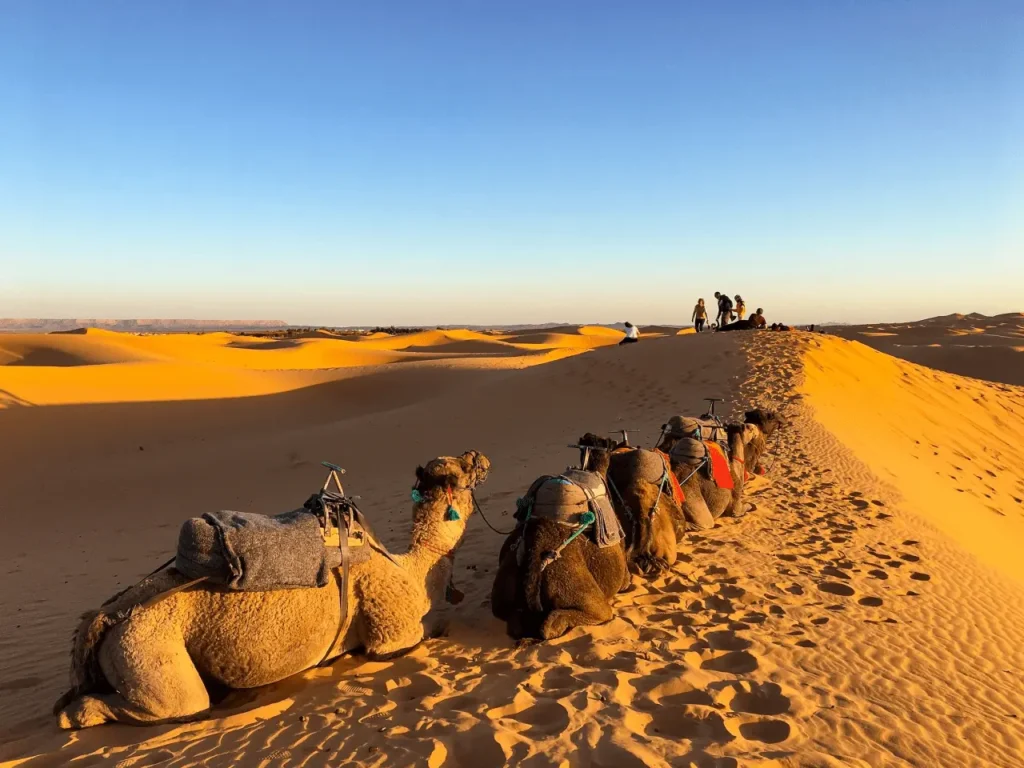
- Challenge: Daytime temperatures exceeding 60°C, dropping sharply to 10°C at night. Constant exposure to fine sand and dust caused rapid abrasive wear on seals.
- Cenbifyn Solution:
- Primary Seal: FKM Step Seals (engineered for thermal stability up to 200°C).
- External Protection: Installation of dual-layer Polyurethane (PU) wipers featuring spiral scraping lips.
- Surface Treatment: Super-precision grinding of the piston rod combined with a Diamond-Like Carbon (DLC) coating.
- Results: Seal service life extended from 6 months to 24 months, achieving zero failures related to dust ingress.
Case Study 2: North Sea Offshore Platforms – H₂S + Salt Spray Corrosive Environment
- Challenge: H₂S concentration of 5% and average annual humidity exceeding 90%. Conventional O-rings exhibited cracking and degradation within just 3 months.
- Cenbifyn Solution:
- System-wide Materials: Implementation of a hybrid HNBR + FFKM sealing configuration.
- Static Seals: Utilization of PTFE-encapsulated O-rings (providing an outer layer of absolute chemical resistance).
- Metal Protection: All metal contact surfaces were treated with a Nickel-Teflon composite plating.
Frequently Asked Questions (FAQ)
Q1: Can standard NBR seals replace FKM to reduce costs? A1: This is only feasible in scenarios where temperatures are below 100°C, no corrosive media are present, and the application is low-pressure static. We strongly advise against compromising in extreme scenarios like oil and gas transport—the cost of downtime caused by a single leak far exceeds the price difference between materials.
Q2: How can I detect seal failure before it happens? A2: Beyond visible external leaks, look for signs such as increased system pressure fluctuations, actuator lag, oil emulsification, or unusual odors. For critical applications, we recommend installing online leakage sensors for real-time monitoring.
Q3: How do I choose between global brands (e.g., Parker, Trelleborg) and local high-end seals? A3: The key lies in material certification and batch consistency. Cenbifyn provides localized alternative solutions with equivalent performance, backed by third-party test reports, typically reducing costs by 30% or more.
Q4: Do seals have a shelf life? A4: Unopened FKM/HNBR seals stored in a dark, dry environment below 25°C generally have a shelf life of 5 years. Once expired, the hardness and tensile properties must be re-tested and qualified before use.
Conclusion
In extreme environments, hydraulic seals are by no means “off-the-shelf commodities”; they are highly customized functional components. Their reliability depends on an in-depth analysis of operating conditions, precise material matching, and a closed-loop verification process spanning from design to maintenance. Neglecting any single link can trigger systemic risks.
The key to ensuring continuous equipment operation and reducing total life-cycle costs is choosing a partner equipped with a specialized material database, advanced simulation capabilities, and proven failure analysis experience.
Why Choose Cenbifyn for Your Sealing Engineering Services?
Professional Materials Laboratory: Equipped with in-house hot-air aging ovens, media immersion test rigs, and Shore hardness testers, allowing us to rapidly complete rigorous material compatibility verification.
Advanced Sealing Simulation: We utilize ANSYS-based Finite Element Analysis (FEA) to simulate contact stress and deformation, ensuring optimized groove design and precise clearance control.
Comprehensive Global Certifications: Our products comply with the industry’s most stringent standards, including API 6A, NORSOK M-710, and ISO 2230.
Rapid Response Service: We provide a comprehensive Sealing Solution Proposal and a detailed Material Compatibility Matrix within 48 hours.